

Case Study #1. Sold for $1,125,000 on a $844,800 Assessment
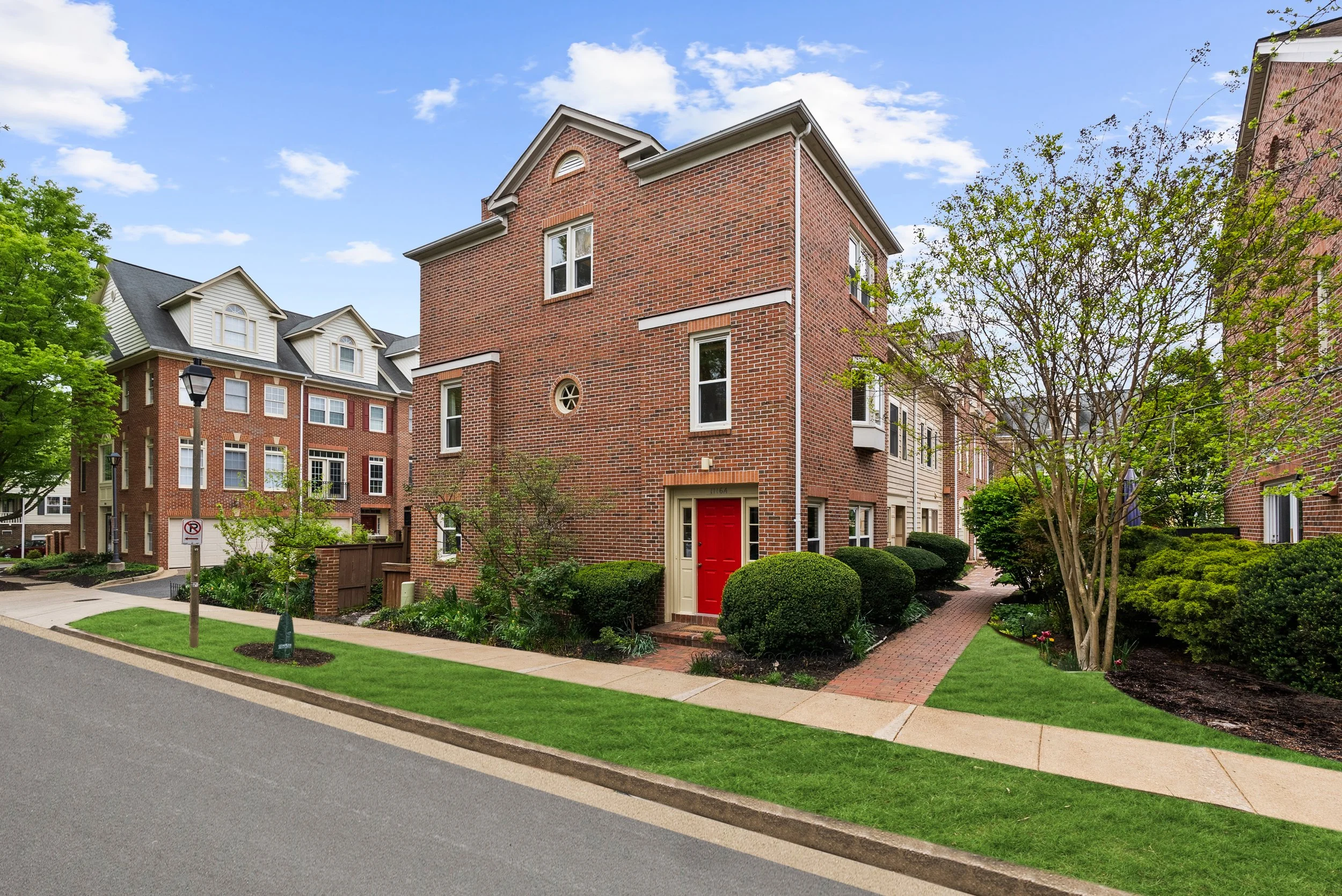
The case study townhome
A 1986 Ballston townhouse, twenty-four days from tenant move-out to active listing
Case Study No. 1 — Ballston, Arlington, VA 22201 · Listed April 24 · Seven offers
The situation
Two owners. One townhouse. A decade of distance.
They bought it as their first home in Ballston — the way a lot of people do, in the neighborhood they wanted, in the house they could afford. Then life moved them to the West Coast, and the house became a rental instead of a home.
Rentals age differently than homes do. Nobody paints a rental because the light in the stairwell feels sad. So the house kept doing what it was built to do in 1986, and it kept looking like 1986 while it did it. Over the years the tenant profile drifted — fewer families, more recent grads and roommate groups. That's not a criticism of anyone who lived there. It's a signal. The condition of a property selects its audience, and this one had quietly stopped speaking to the buyers who pay the most.
So they made the decision that starts most of my listings: it's time to let this go and put the money somewhere else.
Then came the real question.
Do we touch it, or do we sell it as it stands?
What was already good: end unit, all brick, hardwoods, new windows
The house had four assets that money cannot easily add later — an end-unit position with light on three sides, an all-brick exterior, real hardwood on the main level, and windows that had already been replaced. I want to be honest about this, because it matters to the math. This was not a bad house. It was a dated house — and those are two completely different problems.
End unit. Light on three sides. You cannot buy that later.
All-brick exterior. No siding conversation, no maintenance objection.
Hardwood floors on the main level. Real ones, under the wear.
Windows already replaced. The single most expensive "no" a buyer can hand you, already removed from the table.
The bones were solid. The finishes were the problem.
What wasn't
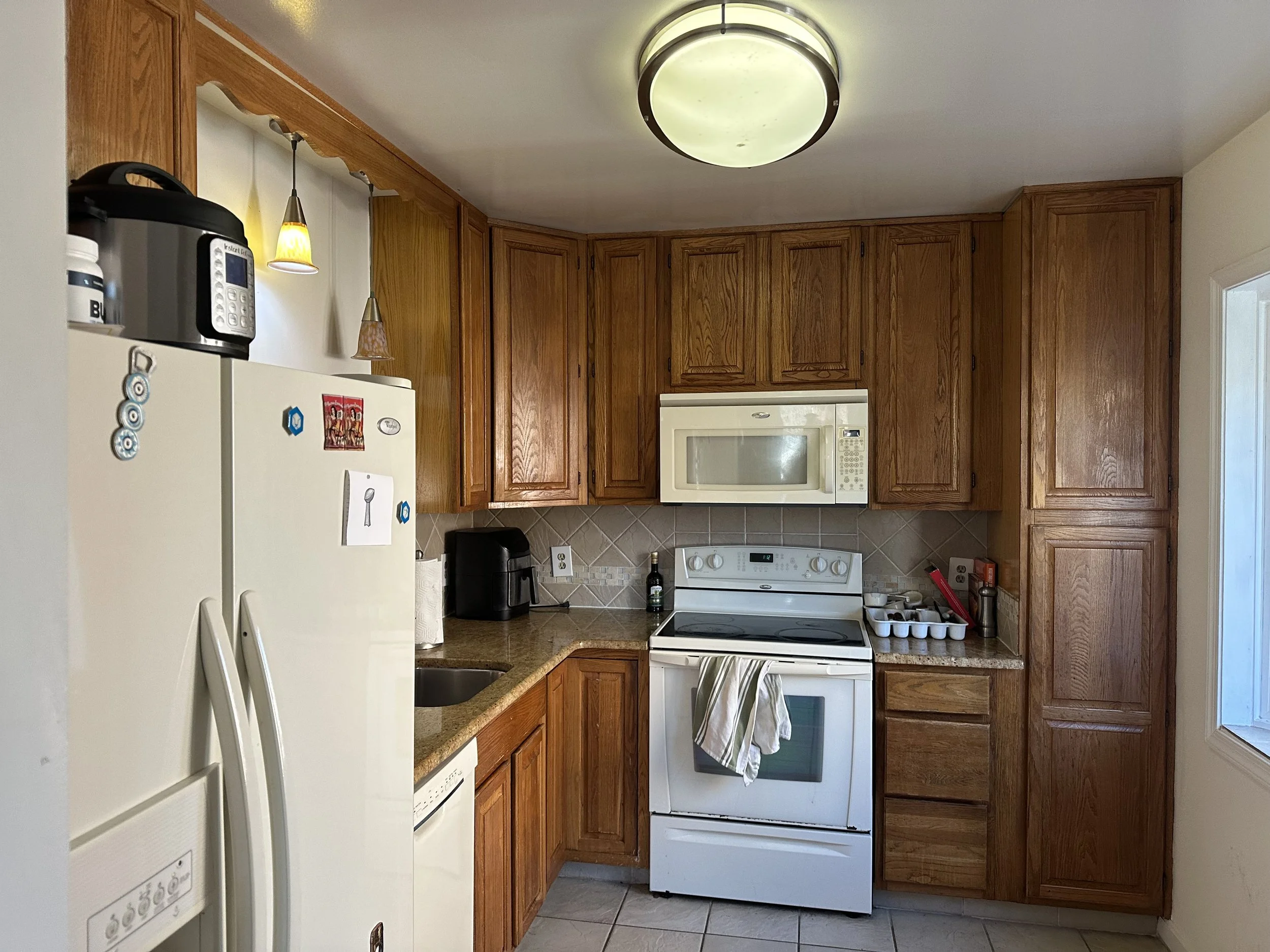
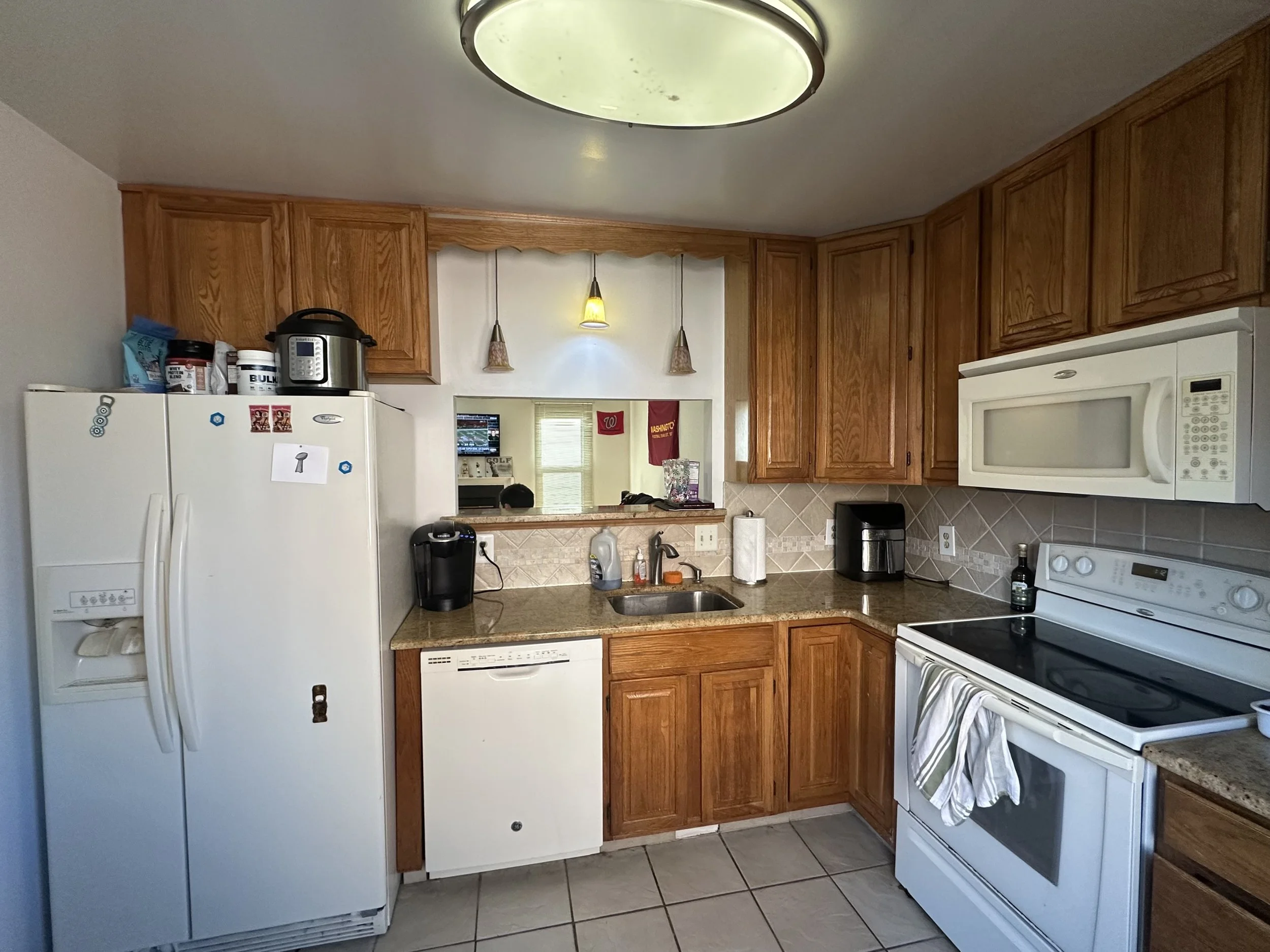
Original kitchen
Original baths
Original light fixtures throughout
Worn-out carpet
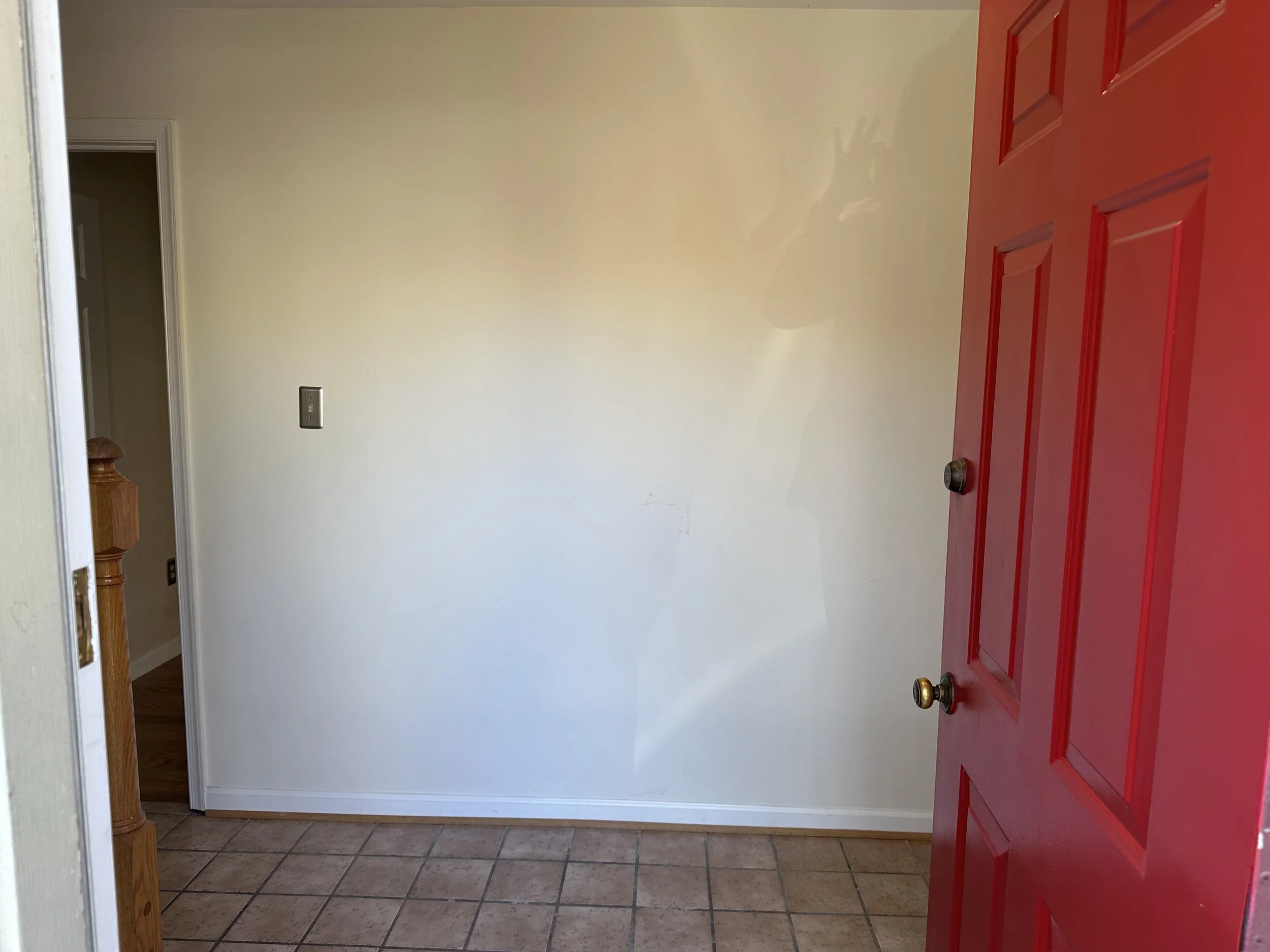
Pink floor tile at the entry — the first thing anyone saw
That last one is worth pausing on. The entry was pink tile. Not "neutral and slightly warm." Pink. And the entry is where a buyer forms the opinion that every other room then has to argue against.
The two paths I lay out for every seller in this position
Before anyone spends a dollar, I price both outcomes and put them side by side. On this house, the assessed value was $844,800, and the comparable sales split cleanly into two groups.
Un-renovated townhouses in this pocket of Ballston were selling at or slightly above assessment — call it assessment to $50,000 over. Those are real sales, and I sent them the full comp set so they could see it themselves.
Renovated townhouses were clearing assessment by $100,000 or more.
If we sold it as-is: somewhere between $844,800 and $894,800. Longer on the market. No cash needed from them. And the people walking through would be investors, flippers, and bargain hunters — buyers whose entire business model is your discount.
If we renovated first: $944,800 or better. Faster sale. Still no cash needed from them up front, because I front the work myself and get reimbursed at closing. And the people walking through would be families.
I told them plainly that as-is was a legitimate choice. Sometimes it takes a bit longer to sell, and the market sets the final number either way. Plenty of sellers pick that path for good reasons, and I don't argue them out of it.
They chose to renovate.
What a scope like this costs in Arlington
Budget $20,000 to $30,000 for a cosmetic renovation of a three-level Arlington townhouse. That's the range I quote, and it's the honest one. Here is how it distributes, using the rates my crews actually charge in 2025 — not a national calculator, and not a number I made up to sound impressive. Fair warning: these figures are lower than what you'd be quoted doing this on your own, and the section after the list explains exactly why.
Whole-house paint, including kitchen cabinets, labor and materials: $7,500 to $9,000. The single biggest line item, and the one that returns the most.
Hardwood refinishing, two levels: $3,000 to $4,000. The highest visual impact per dollar you can spend in an aged house.
Stair and hallway carpet: $2,000 to $2,500.
Stone counters, backsplash and tile: $2,000 to $2,800. That assumes you keep the existing cabinet boxes.
Carpentry, plumbing and vanity installation: $1,500 to $2,500.
Lighting, a full house of fixtures — twelve to fourteen of them: $1,200 to $1,800. Fixtures only, not the labor to hang them.
Bath fixtures — two vanities, faucets, mirrors, a toilet: $1,000 to $1,500.
Tub reglazing: $700 to $900. Against $3,000 or more to replace one and open a wall.
Rods: $250.
New Appliances: $3,325.
Why these numbers are lower than the ones you'd get
Because I'm not hiring the companies you'd find on Yelp.
A seller starting from scratch searches, finds the firms with the most reviews and the best websites, and collects three estimates from businesses carrying a sales team, a project manager, an office, and a margin on top of all of it. That's in the quote before anyone opens a can of paint.
I work with small crews. A painter with three people. A floor refinisher. One carpenter who also handles plumbing. They do the work themselves, they've done it for years, and what you pay for is the work.
The part that takes years to learn isn't the phone numbers. It's knowing exactly what each of them is excellent at — and what I'd never hand them. I don't send my best painter to set tile. That's most of what keeps a project on budget and on schedule, and it isn't something you can assemble in the three weeks between a tenant moving out and a listing date.
Materials follow the same thinking. The kitchen counter is entry-level quartz, quiet pattern, soft veining. Not the premium slab, and a fraction of the cost — but quartz is quartz. It takes a hot pan and fifteen years of family dinners the same way the expensive one does. The quieter counter is also simply the better-looking choice here. It lets whoever moves in set their own things on it without fighting the room.
Where I don't save: anything that can fail, and anything hands touch every day. Plumbing, electrical, the labor doing the installing. A faucet gets used a dozen times a day for a decade. A reglaze that peels in eight months lands on someone who just spent everything they had to move in.
Knowing where not to spend is worth more than knowing where to spend. Almost anyone can spend.
Who pays for the work up front
I do. On this project I paid every contractor and supplier directly, out of my own funds, and was reimbursed at settlement from the sale proceeds. No money moved from California. No wire transfers, no approving invoices one at a time from three time zones away, no seller writing a check to a painter they've never met.
That arrangement does four things:
It removes the cash barrier. The most common reason sellers skip the work isn't skepticism — it's liquidity. The money is in the house, and the house is the thing you're trying to sell. Fronting the cost breaks that loop.
It removes the coordination barrier. My crews get paid the day they finish. That is half the reason they show up for me on twenty-four hours' notice, and it is not something a seller managing vendors from another state can replicate.
It aligns the incentives, and this is the part I care about most. I don't get repaid until the property closes. If I recommend work that doesn't return its cost, that's my capital sitting in your drywall. It makes me conservative in exactly the way you want your agent to be conservative — which is why the answer to "should we also do X" is so often no.
It keeps the accounting clean. Every purchase is receipted and itemized. You see the full ledger before settlement, at cost, with no markup and no interest. I'm not a lender and I don't want to be one — this is reimbursement of documented expenses, nothing more.
I don't do this on every listing. It depends on the property, the scope, and whether I believe the numbers. But when I say a renovation will return, I'm willing to put my own money behind the opinion, and I think that's a fair standard to hold any agent to.
Two decisions in the scope save more than everything else combined:
Paint the cabinets, don't replace them. These boxes were solid 1986 construction — better built than a lot of what gets installed new today. Properly prepped and sprayed, with new counters and new hardware, they cost roughly a tenth of a new kitchen and they will outlast one. Ripping out sound cabinets is vanity, not strategy, and it sends a working kitchen to a landfill.
Reglaze the tub, don't replace it. Buyers see "clean white tub" either way. One of those costs eight hundred dollars and takes a day. The other opens a wall.
I hand every seller a line-item document like this — room by room, paint colors specified, a cost next to each item, fixture cost in one column and labor in the other. Then we go through it together and they tell me what they don't want. I say yes to most of it. The agent proposing the work should be comfortable being told no.
What I hold firm on is the same five things every time: paint, floors, lighting, counters, and the baths. Those decide whether an eighties townhouse reads as "dated" or "updated," and no amount of staging fixes them.
Here's the room-by-room logic, which is what I'll be showing you in the before-and-afters:
Entry & lower level
Painted the hall Kendall Charcoal. Painted the stair railing Tricorn Black. New stair carpet. Three new flush-mount fixtures. Bamboo shade replacing a curtain rod. Why: the pink tile stayed. Kendall Charcoal carries enough warmth to sit beside pink without fighting it, and against walls that deep the floor stops announcing itself and just reads as warm stone. The hall has a window, so the darkness feels enveloping rather than closed in. Replacing that tile would have meant demolition, dust and days I didn't have — and once the walls went dark, it didn't need replacing.
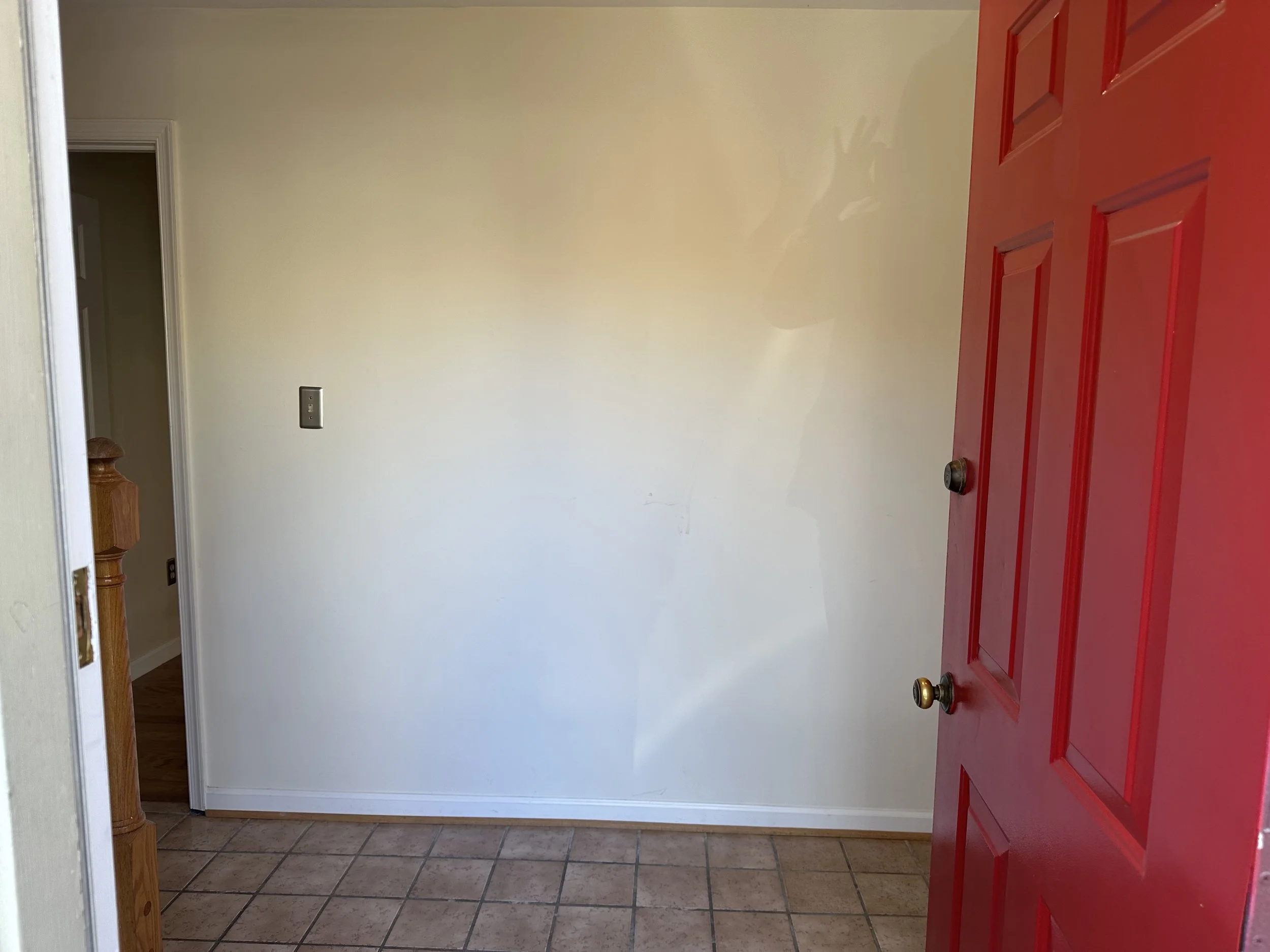
BEFORE. The pink tile stayed.
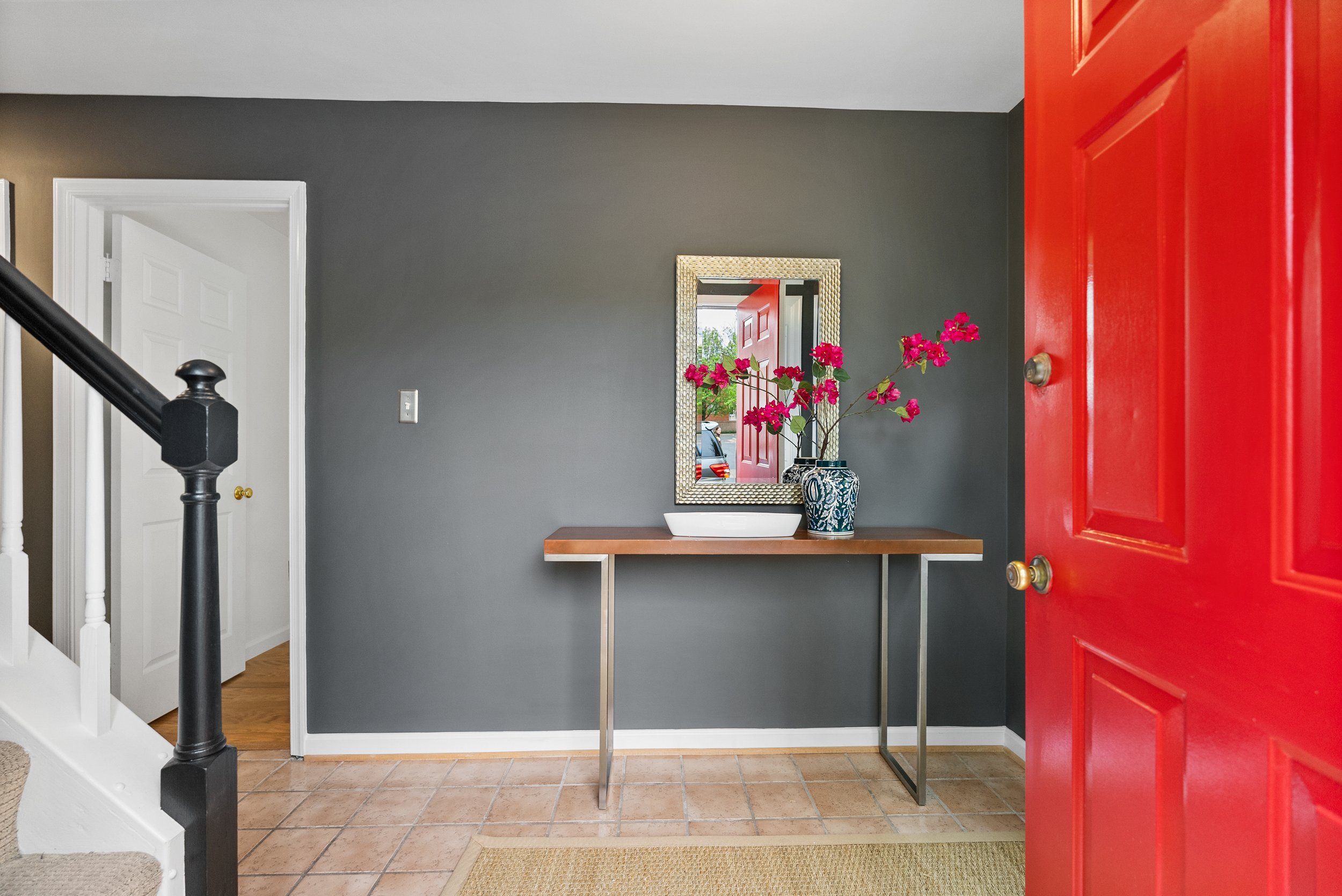
AFTER. Kendall Charcoal on the walls, and it stopped being the first thing you see.
Lower level bath & bedrooms
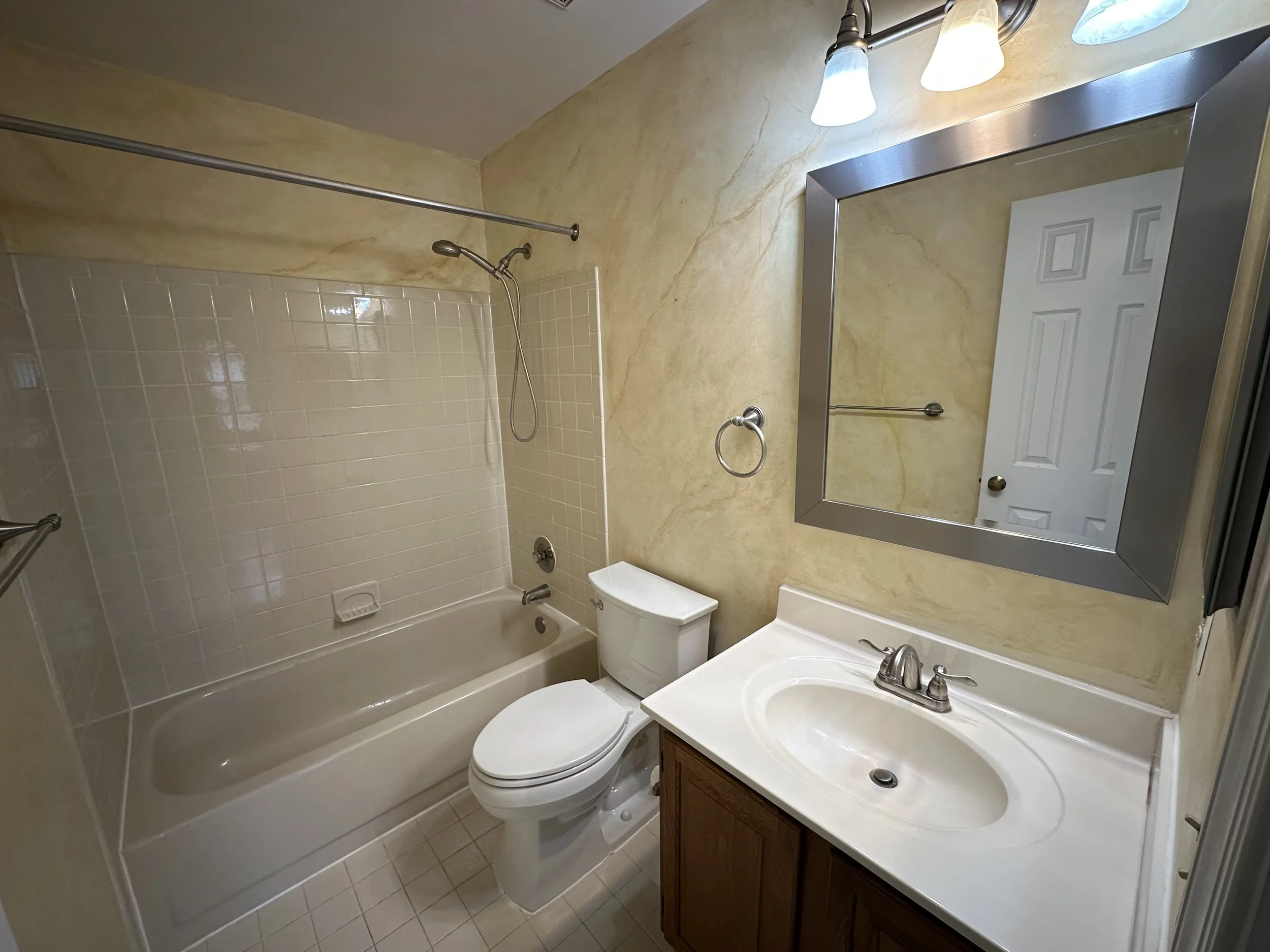
New mirror, new light, new shower head, new curtain rod, vanity painted Kendall Charchoal, walls in Edgecomb Gray. In the bedroom and rec room we brought in furniture rather than building anything in. Buyers do not imagine well. Show them.
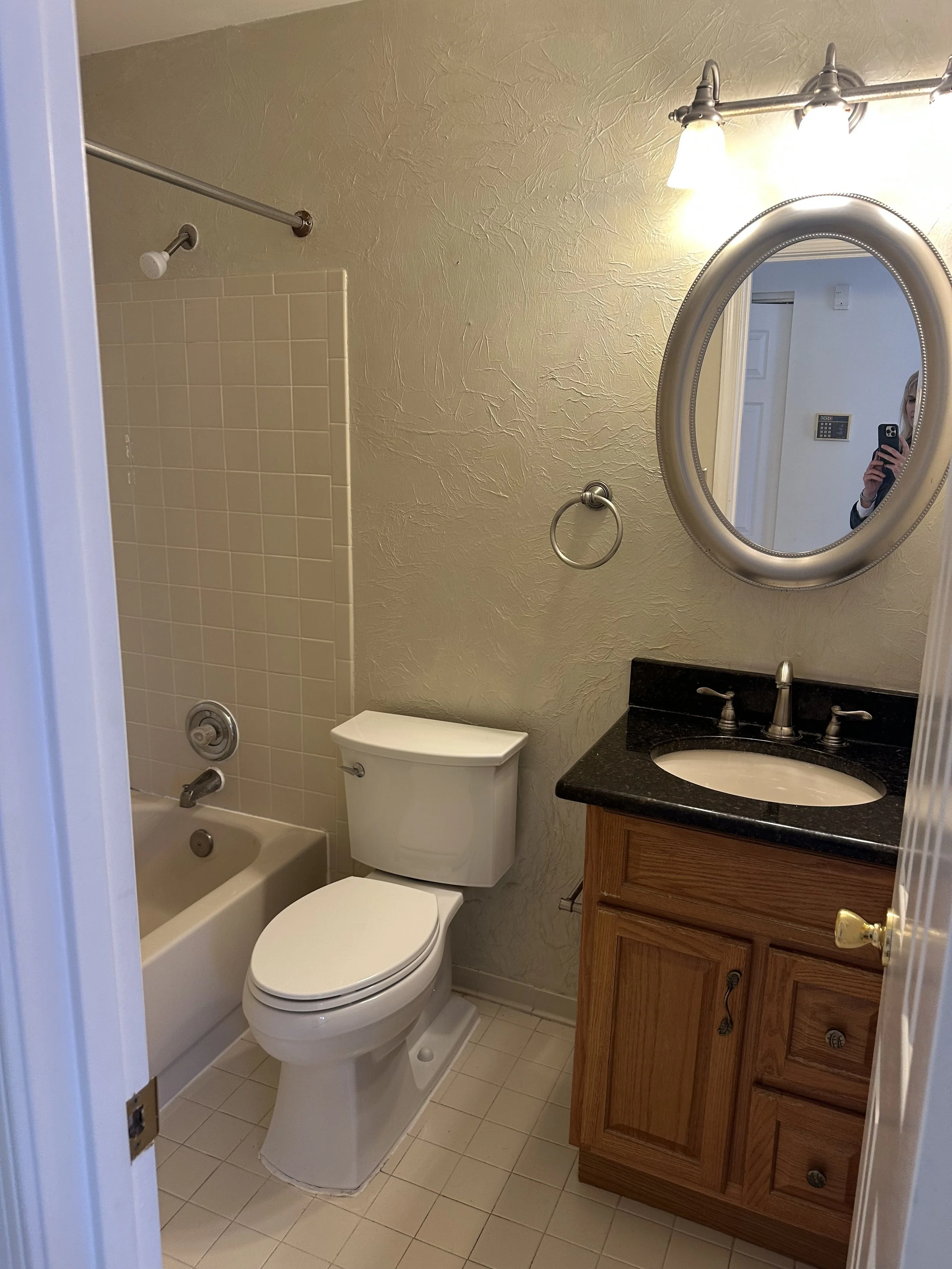
BEFORE - Lower level bath - check the texture on the walls!
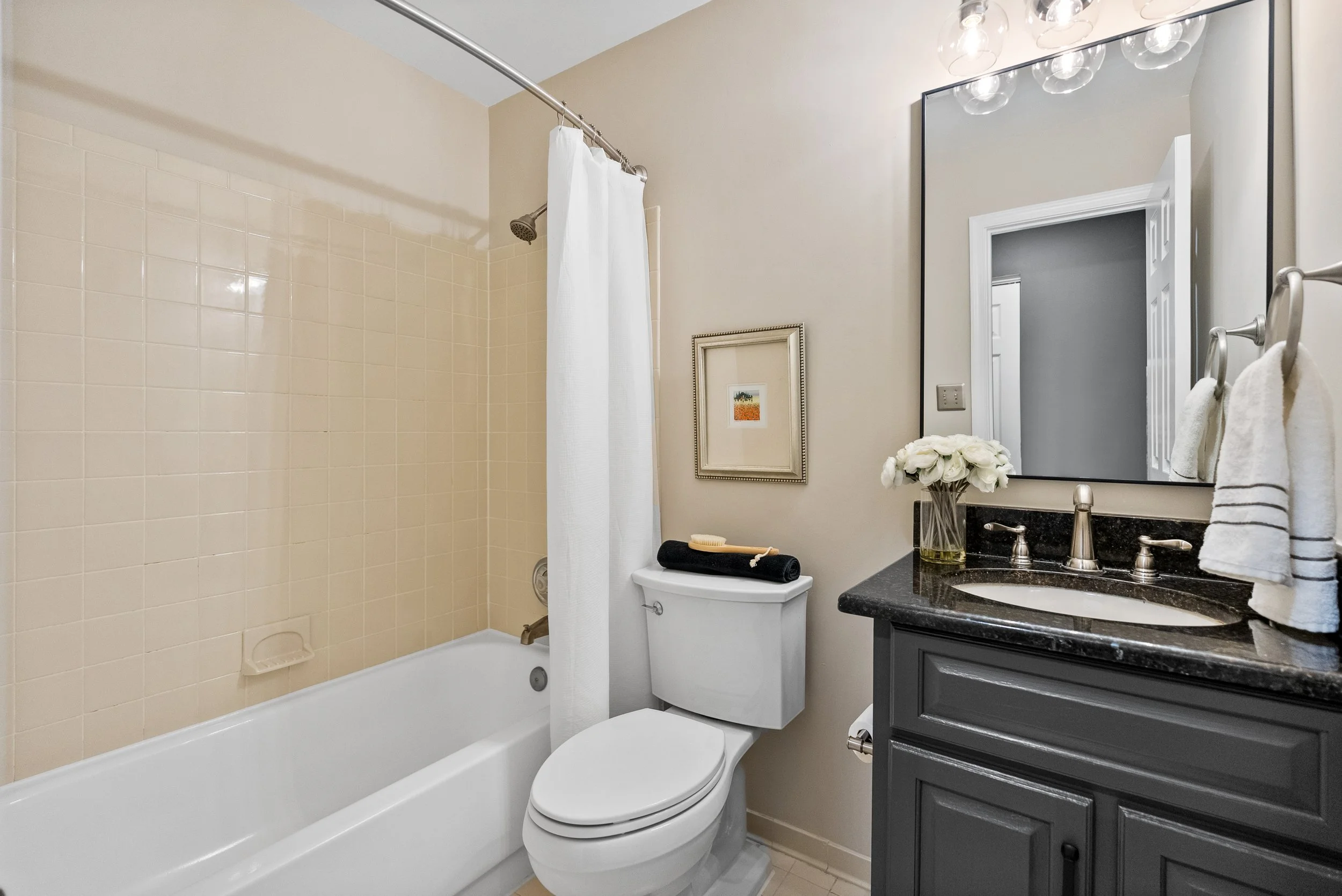
AFTER - painted vanity, new mirror, light, shower curtain rod, reglazed tub. Picking a color was especially hard due to different tile colors on walls and floor.
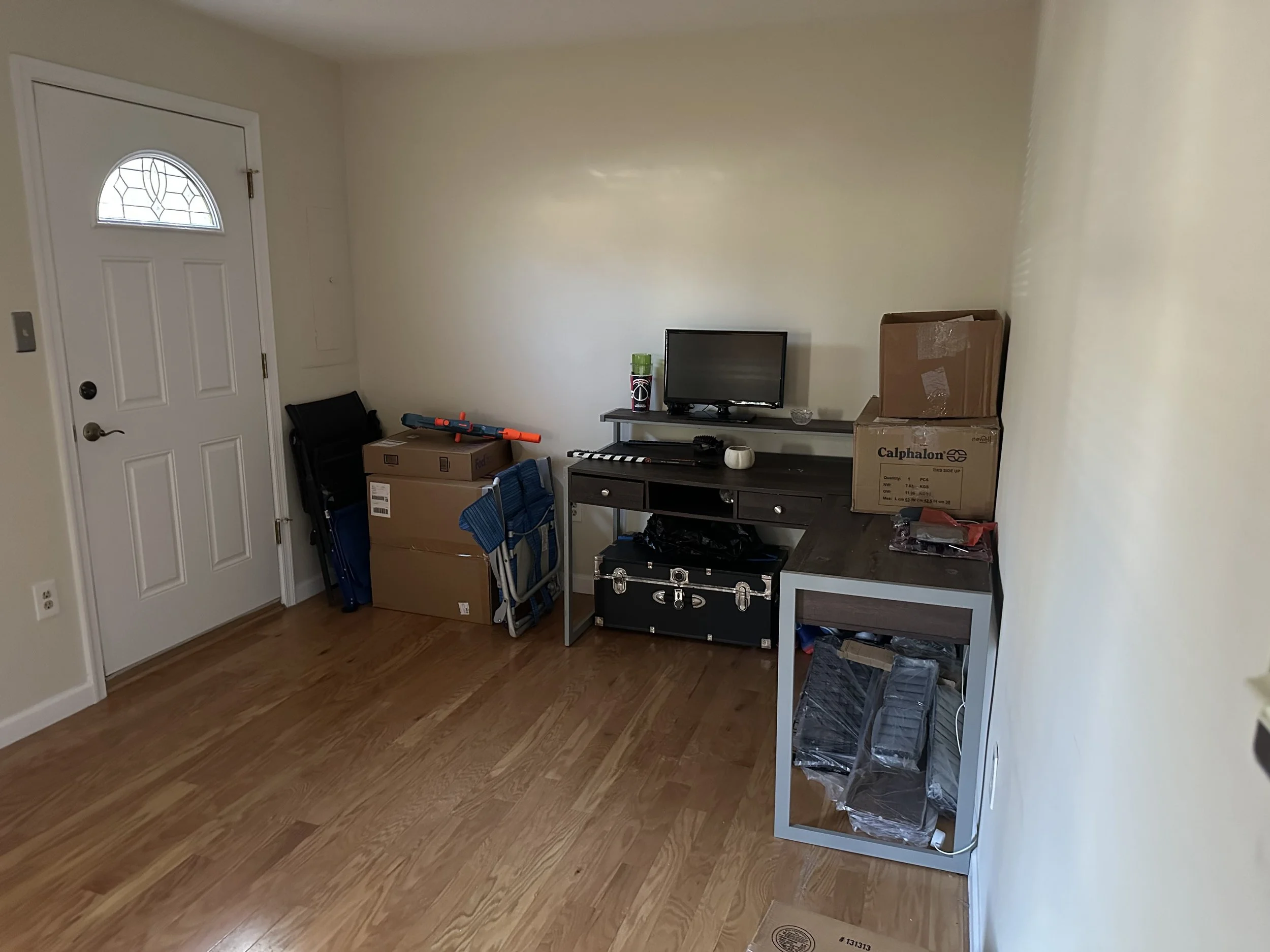
BEFORE - 1st level served as storage room
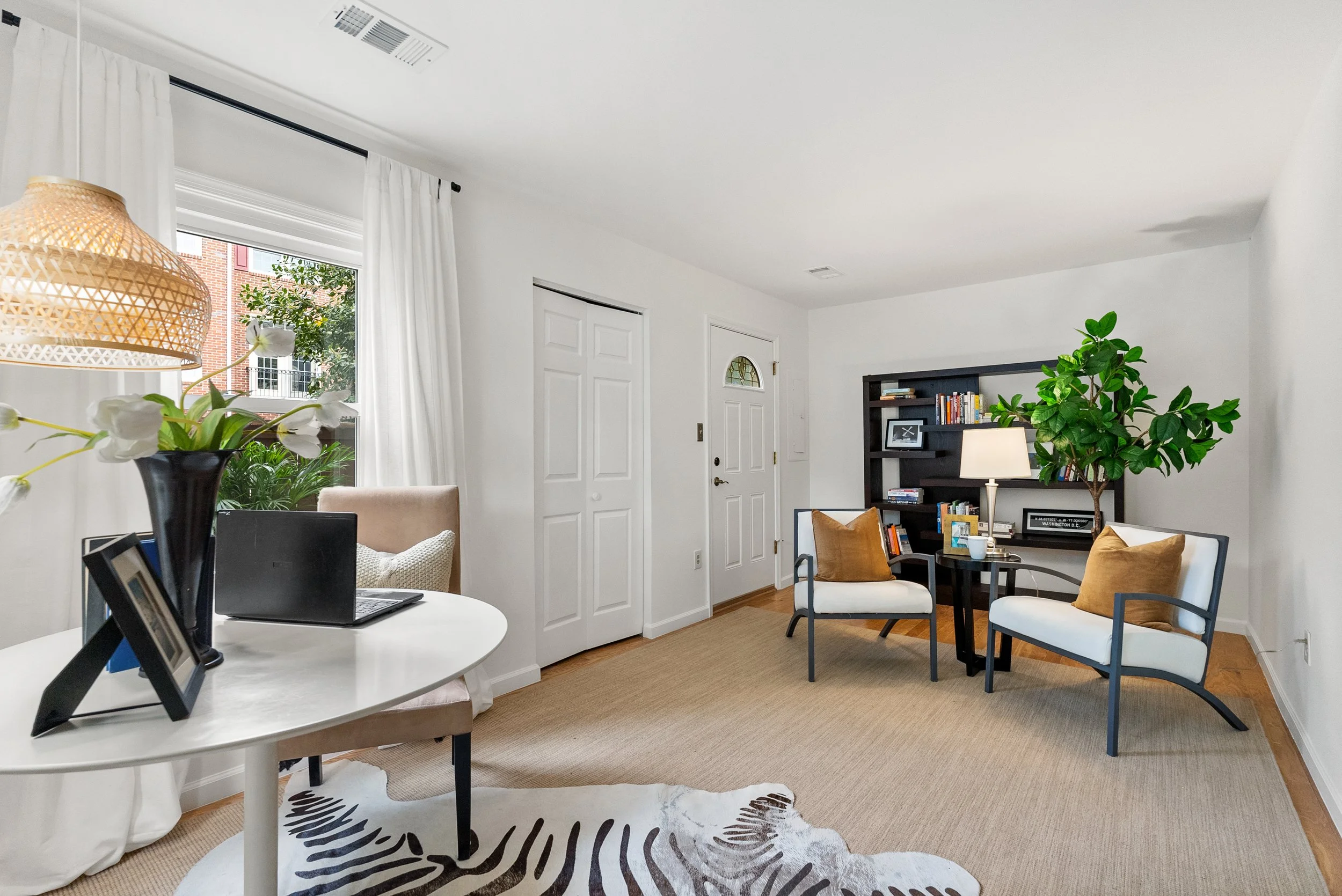
AFTER - tricky spaces need furniture to make sense
Main level
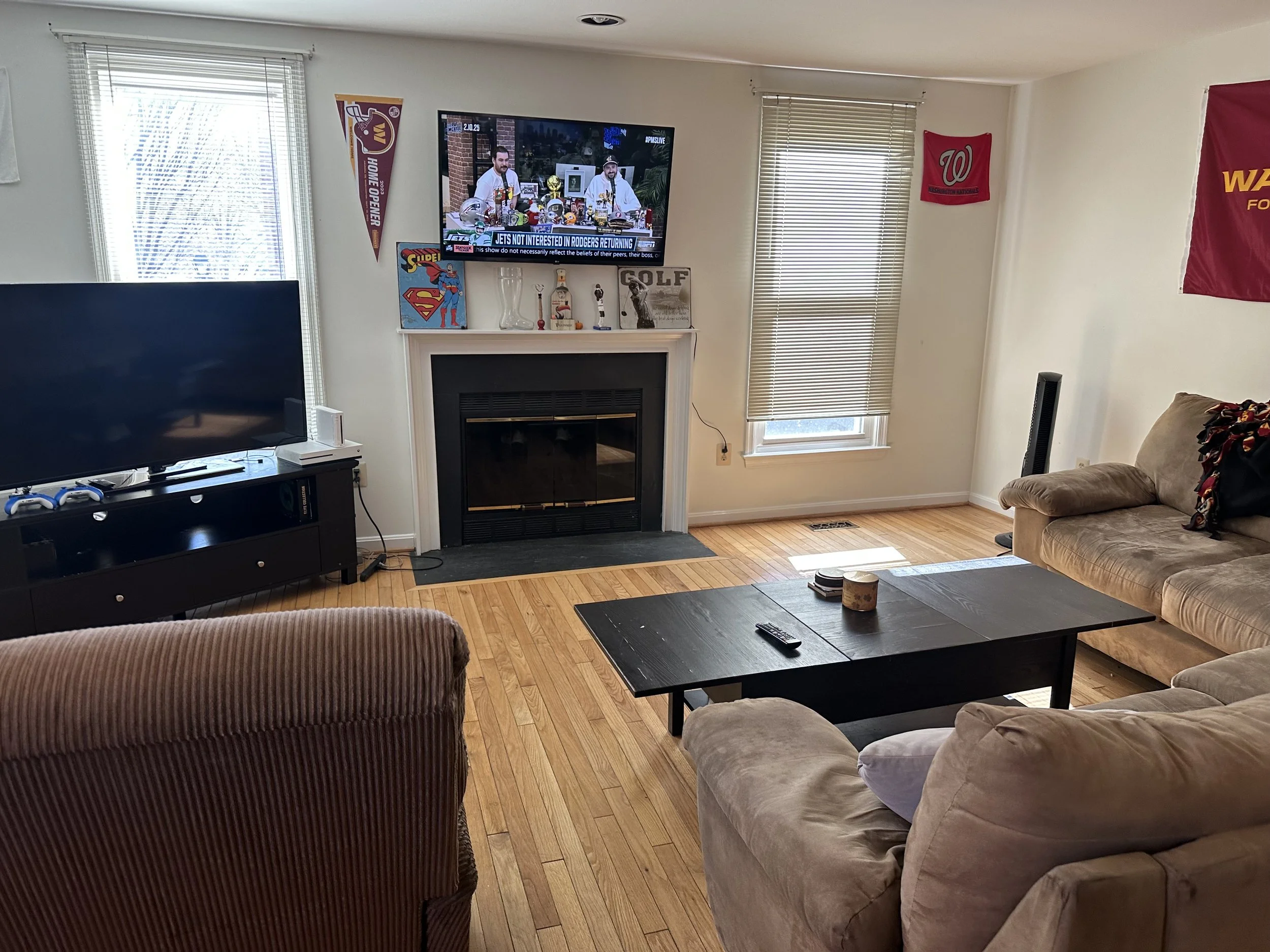
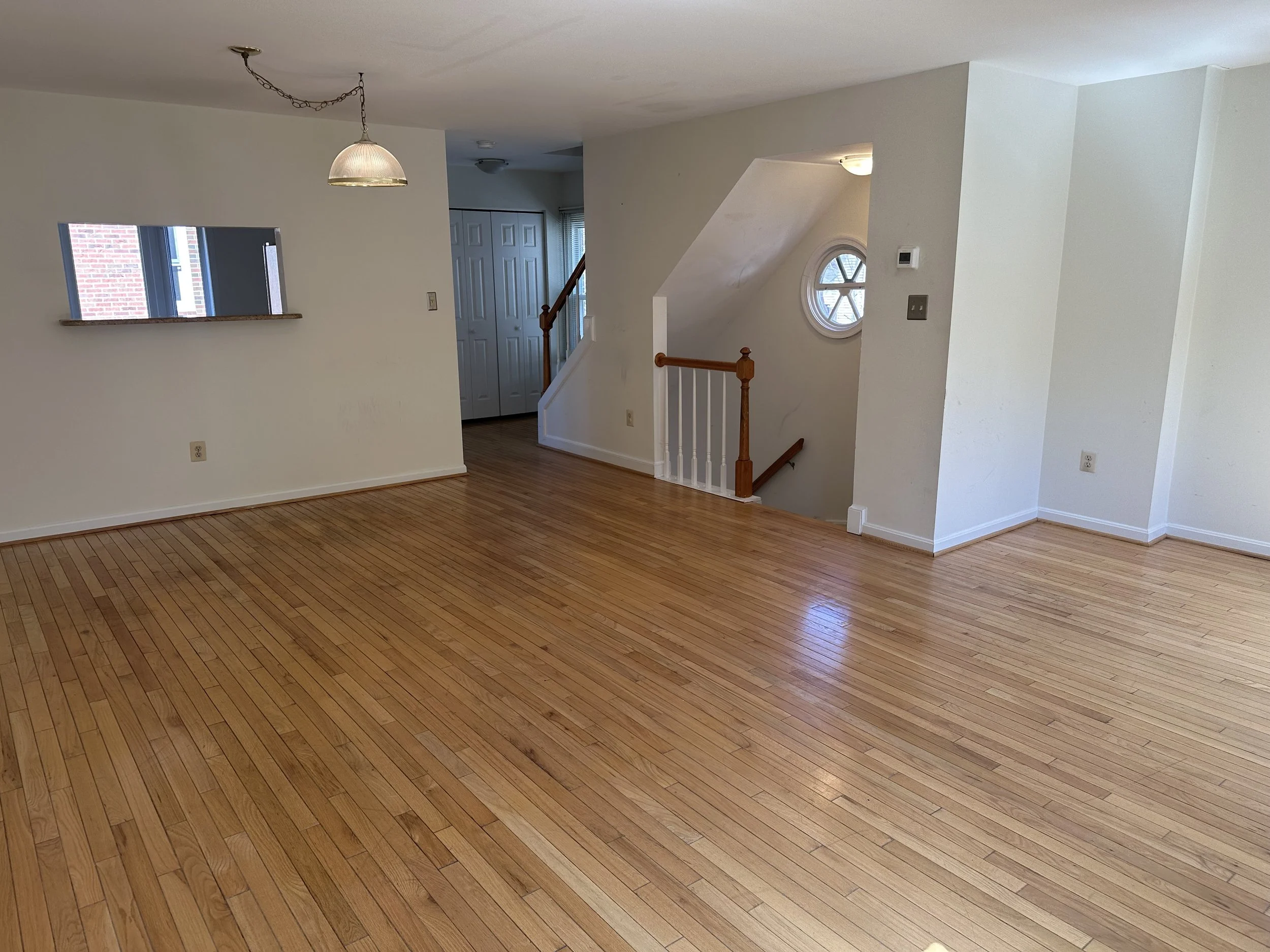
Refinished the hardwoods. New dining chandelier. A modern architectural spotlight. Fireplace mantel painted Tricorn Black. I added a real wood mantel out of pocket, because I knew how important it was. Curtain rods installed at three windows. New ceiling and wall paint throughout. Why: refinished floors are the single highest-impact thing you can do to an aged house. They make everything above them look newer by association.
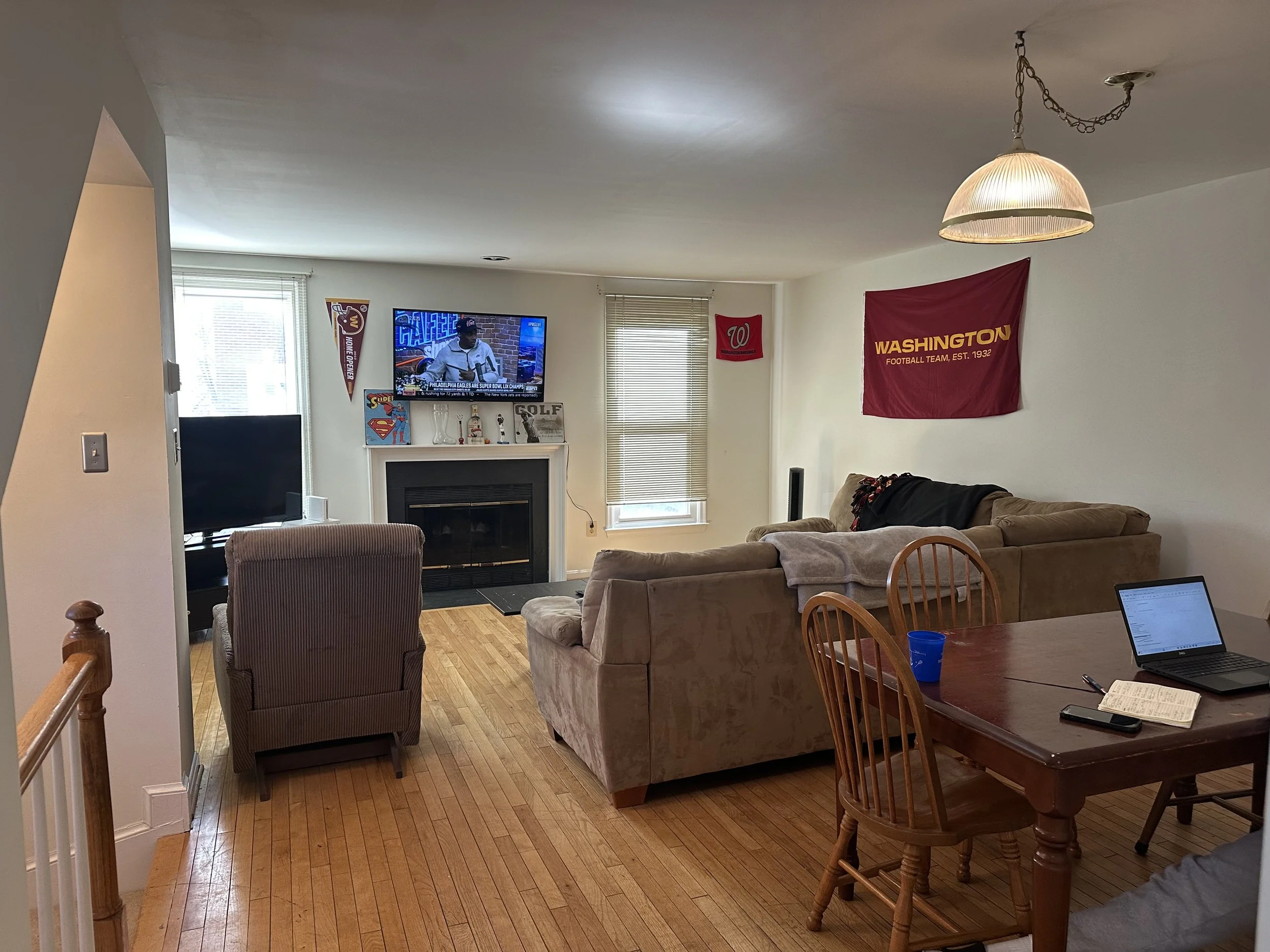
BEFORE - tenant occupied living room
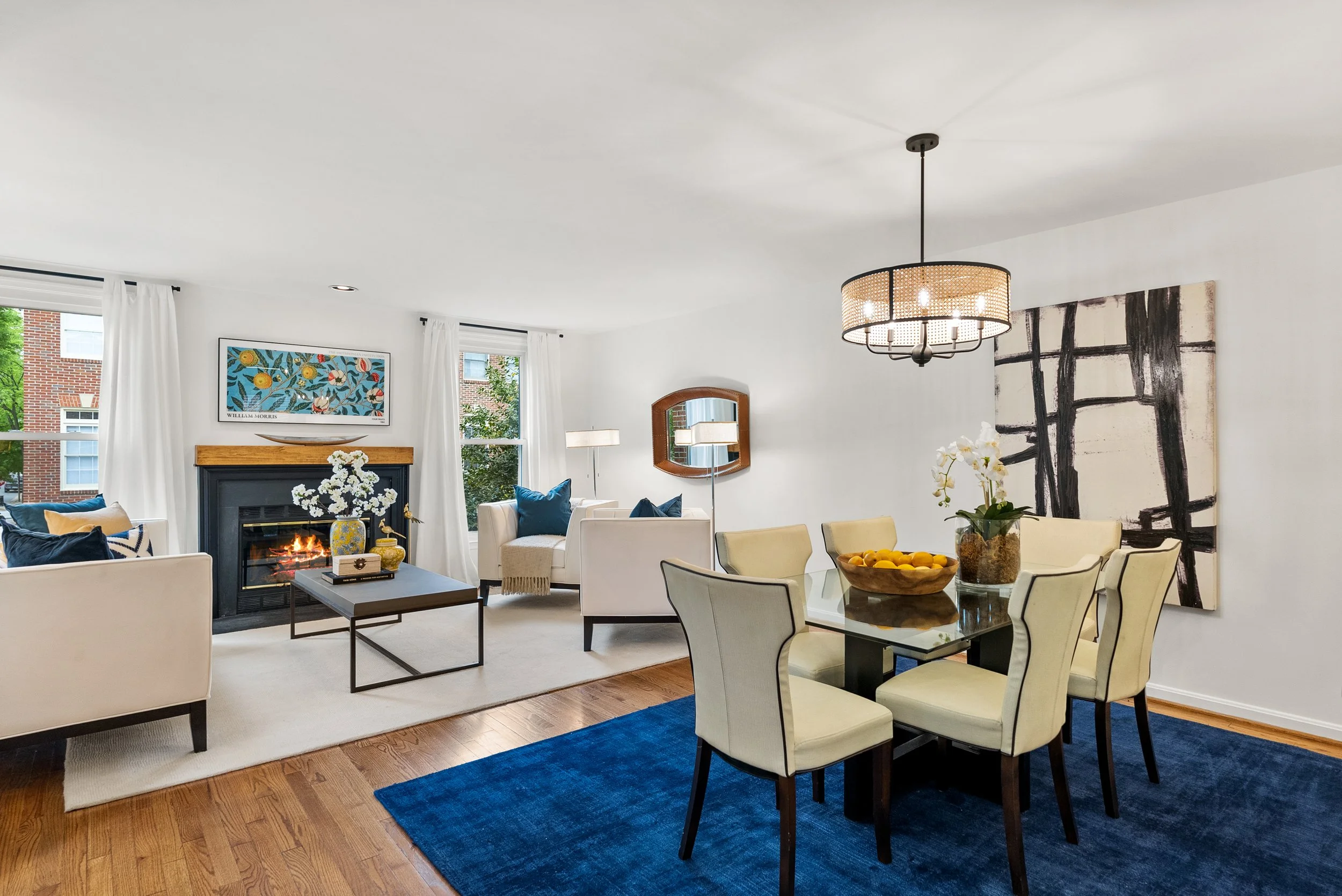
AFTER - fresh paint, refinished hardwoods, new chandelier, new mantel, curtains rods
Kitchen
The biggest change in the house. New stainless appliances. Cabinets painted Accessible Beige with champagne bronze knobs. New quartz counters, white subway tile backsplash, a black faucet. Walls in Mount Etna. Recessed lights in place of the pendants, grout repaired, and we widened the opening to the dining room. Why: the floor stayed. Everything a person touches or looks at directly got changed, and the one thing nobody studies didn't. The dark walls are what keep it from reading as a generic refresh — champagne bronze and a black faucet need some depth behind them to land.
Then the under-cabinet lights, which are my chef's kiss. Under a hundred dollars and an hour of labor, and they change what the kitchen feels like at seven in the evening: a warm line of light along the counter, the one you leave on when everything else is off. That's hygge, for almost no money. I never skip it.
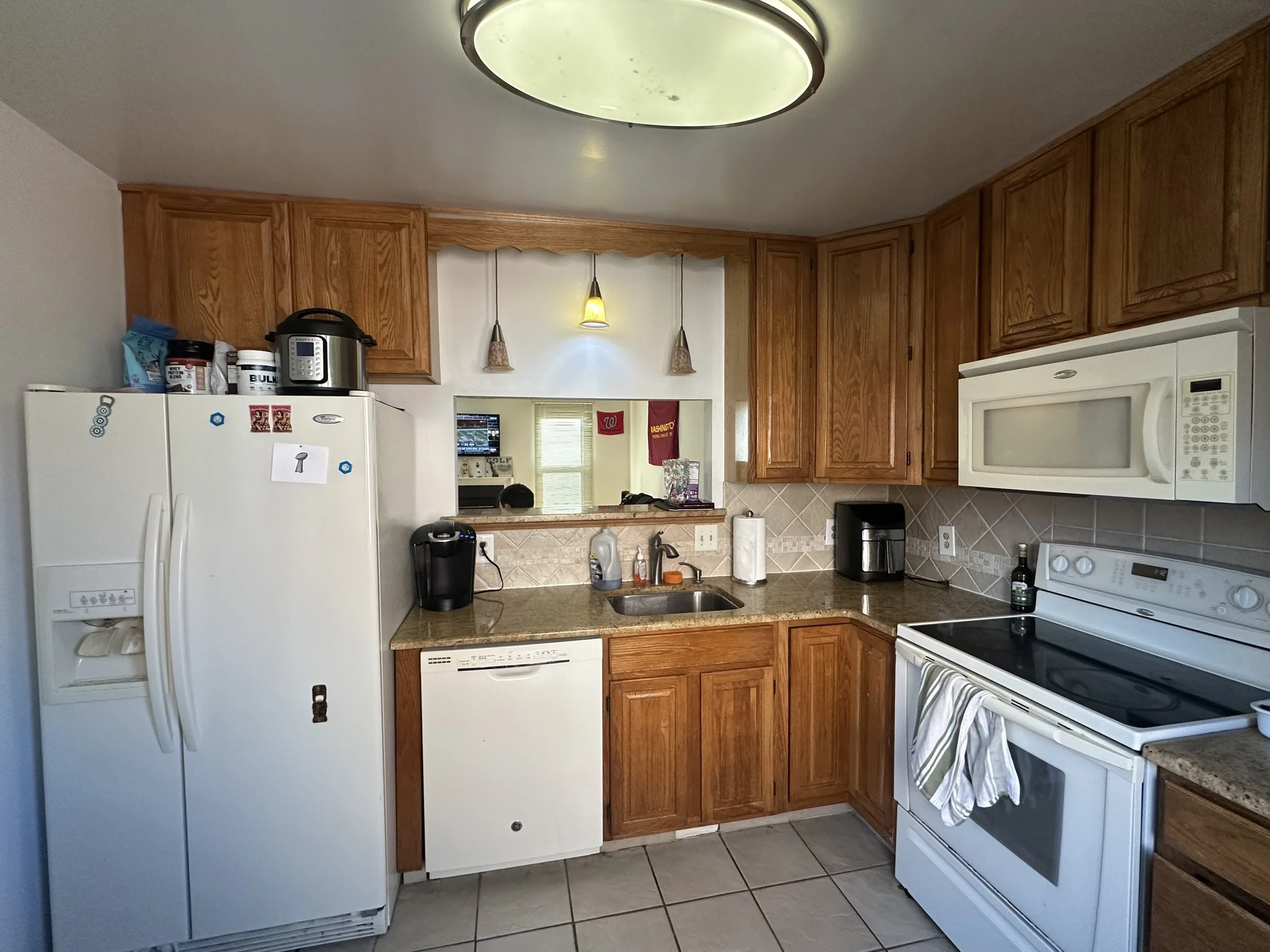
BEFORE - a very 80’s kitchen
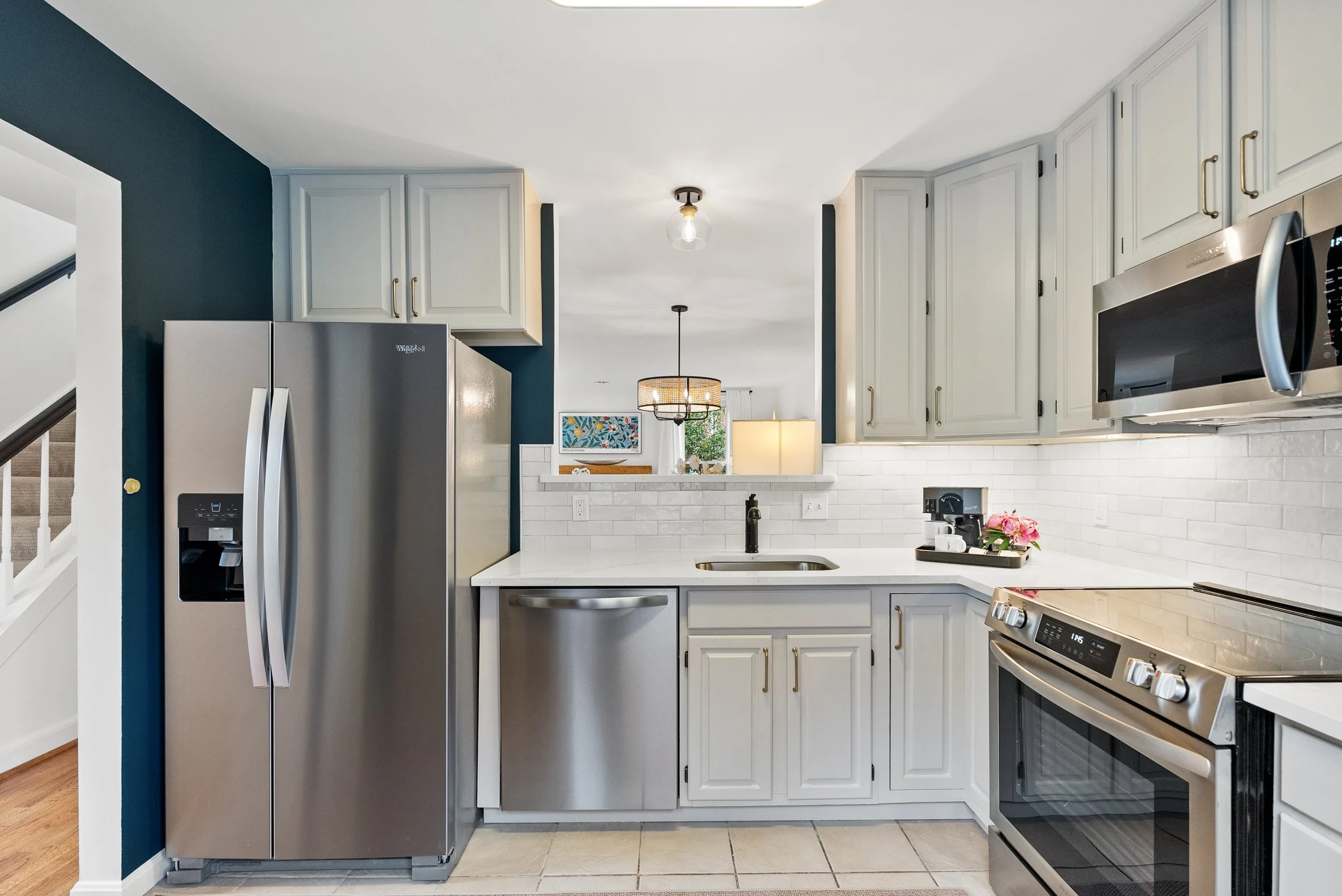
AFTER - new appliances, counters, backsplash, painted cabinets, new faucet and new lights and under cabinet lights
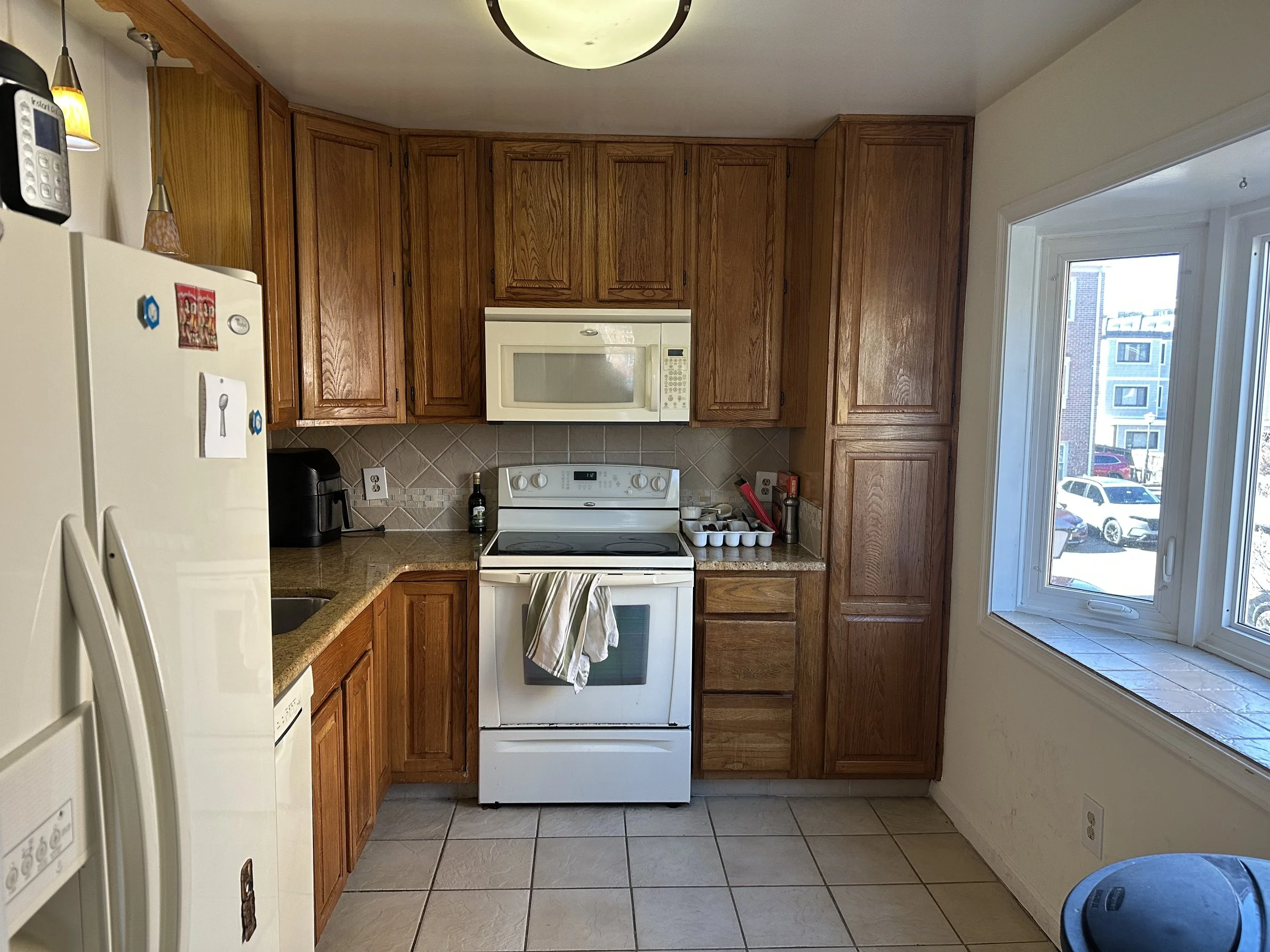
BEFORE
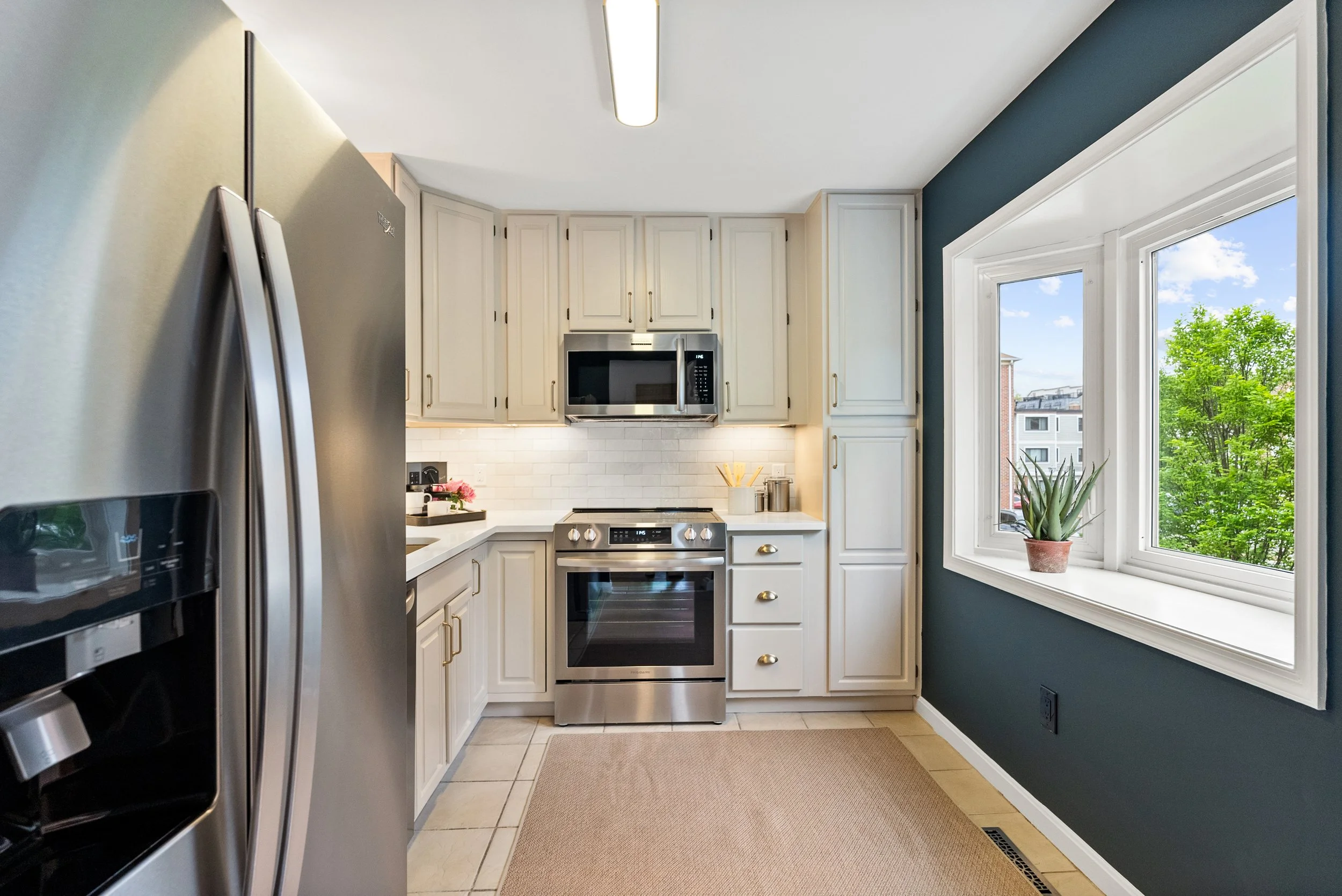
AFTER
Upper level
New stairwell carpet, refinished hardwoods, new hardwoods in the second bedroom, touch-up paint, new air return. Both baths: new vanities, new mirrors, new lights, new faucets, new shower curtain rods, a new toilet, medicine cabinet removed, towel rack swapped for a hook. Tub reglazed rather than replaced.
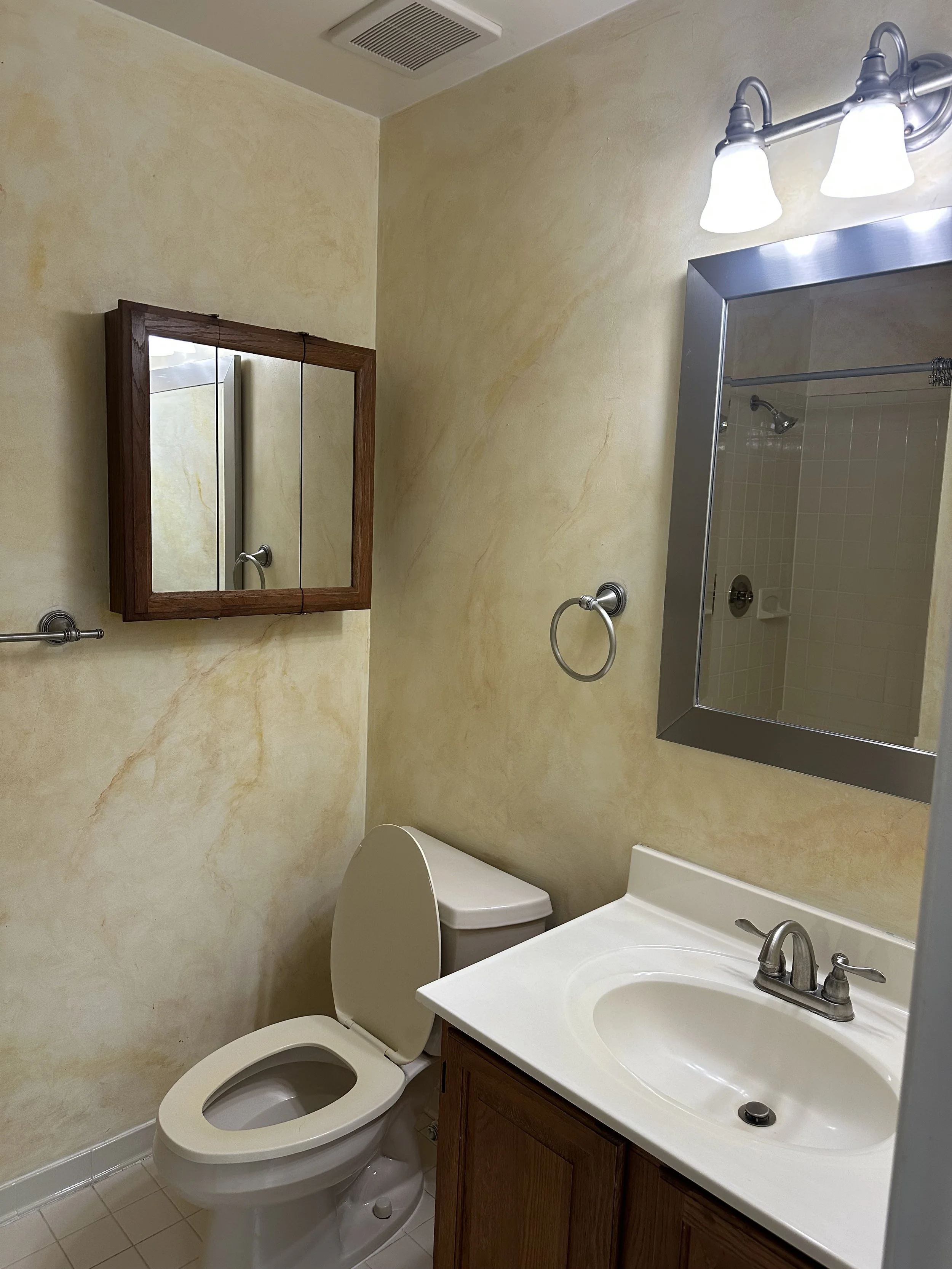
BEFORE - upstairs hall bath
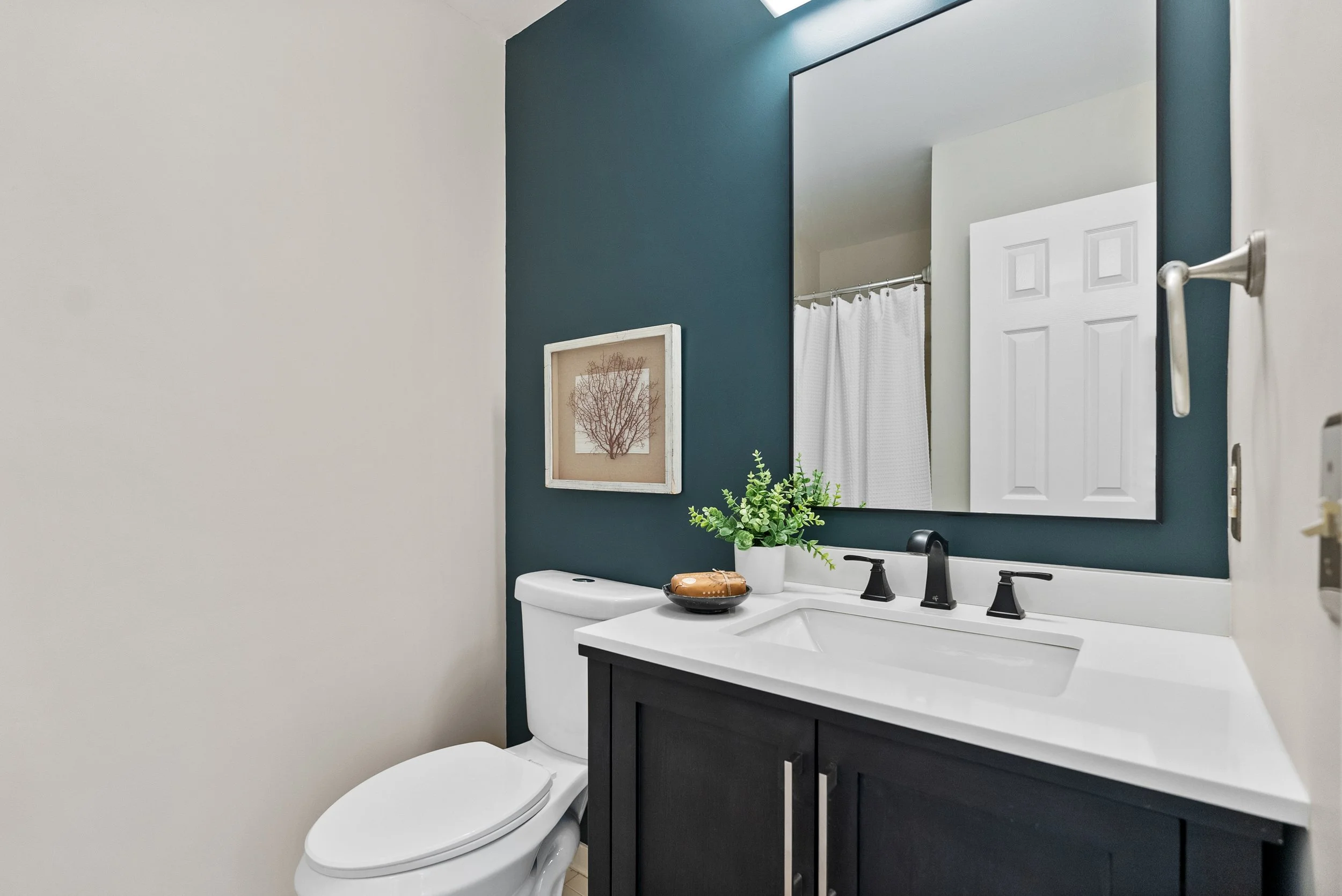
AFTER hall bath - new vanity, faucet, paint, mirror, toilet
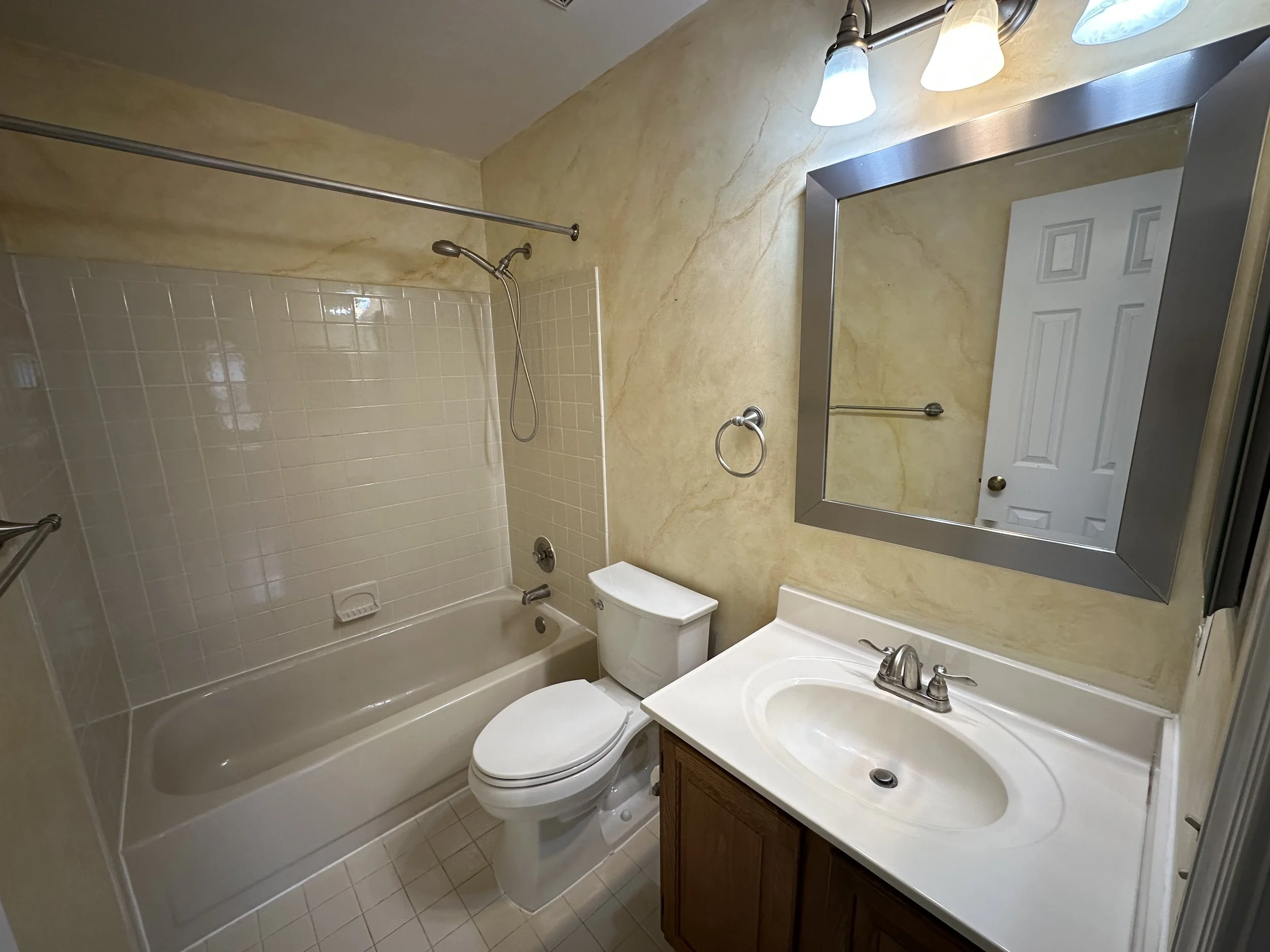
BEFORE - primary bath
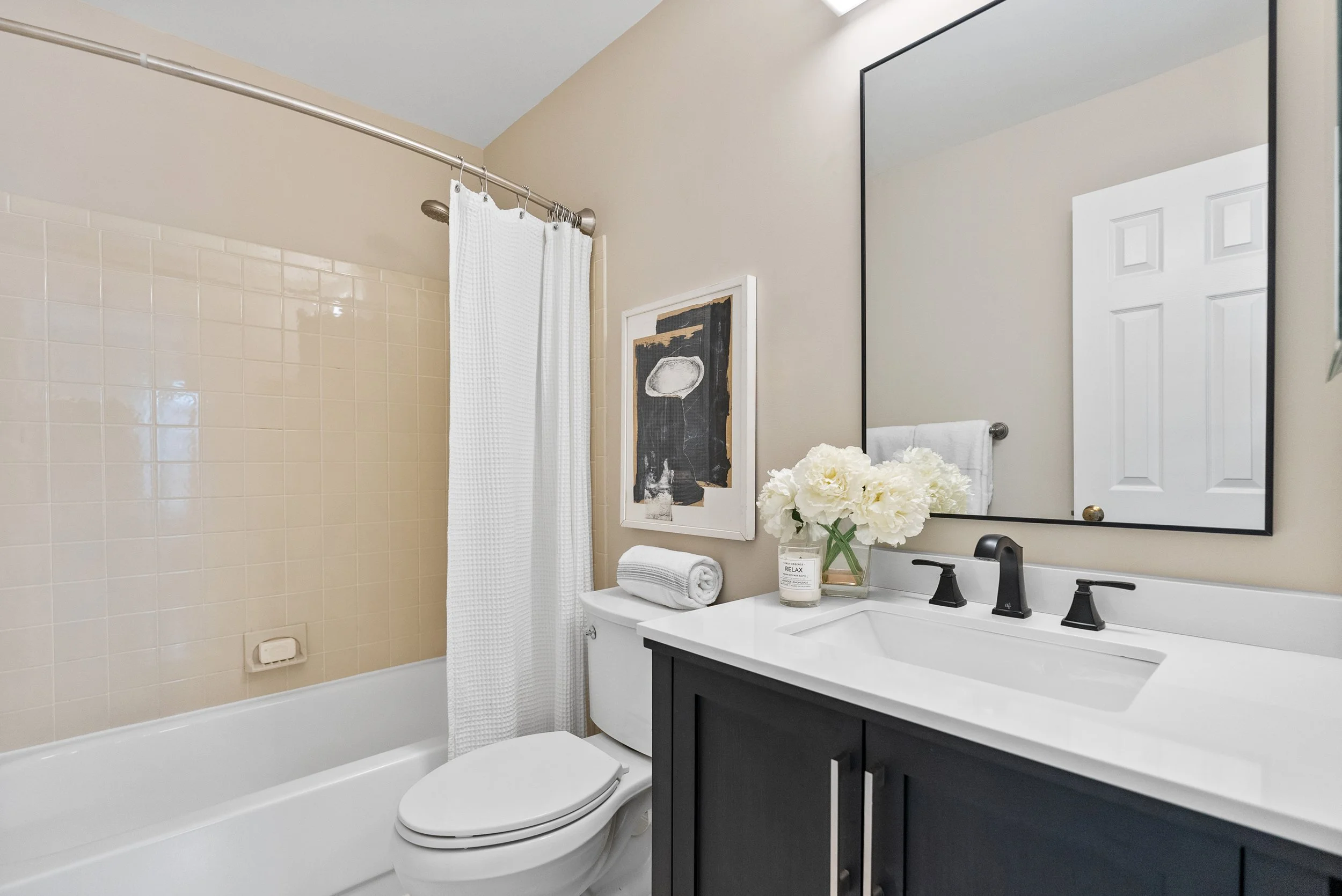
AFTER - primary bath - new paint, vanity, light, mirror, reglazed tub
Patio
This one I cleaned it up myself.
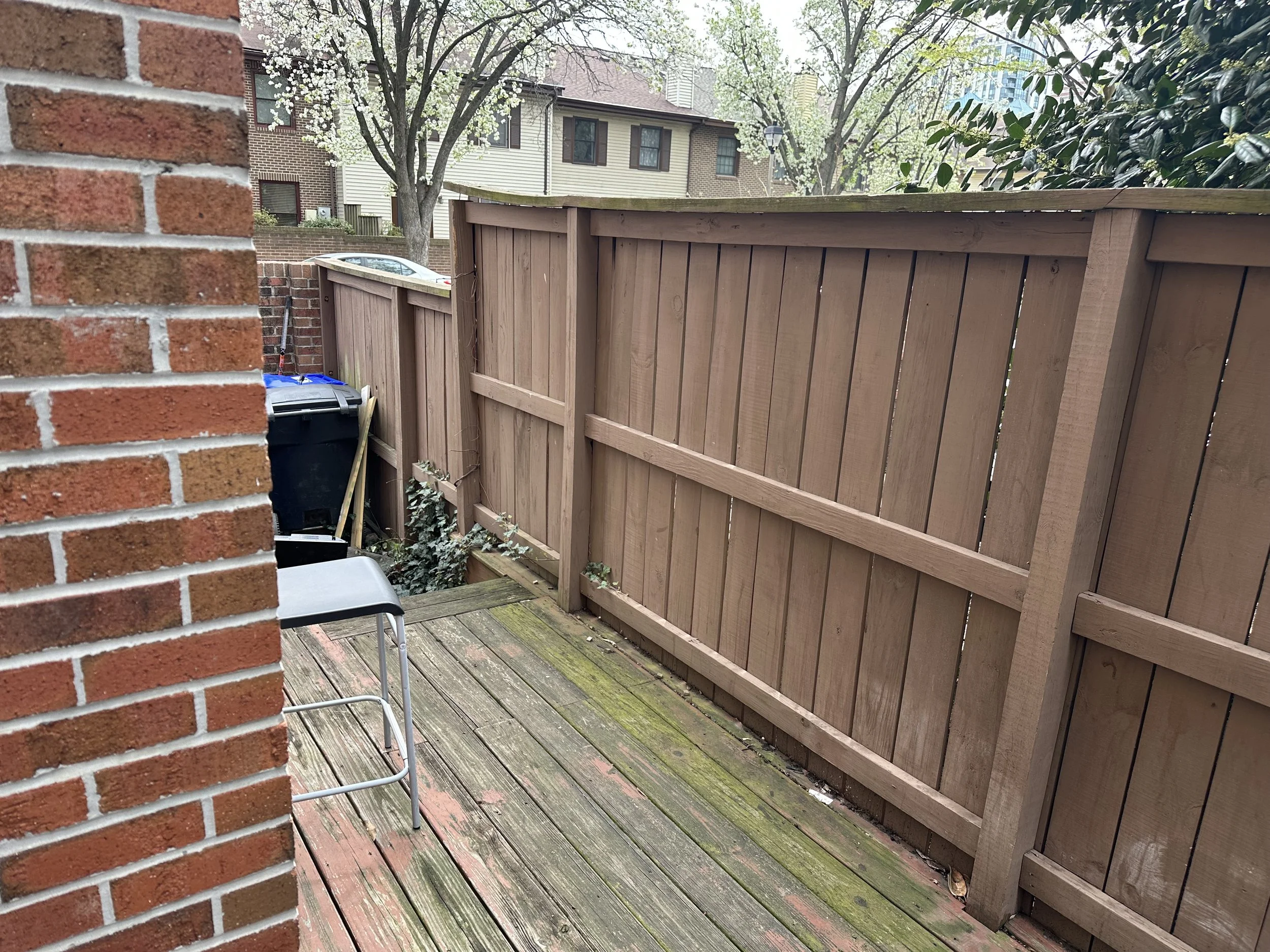
BEFORE
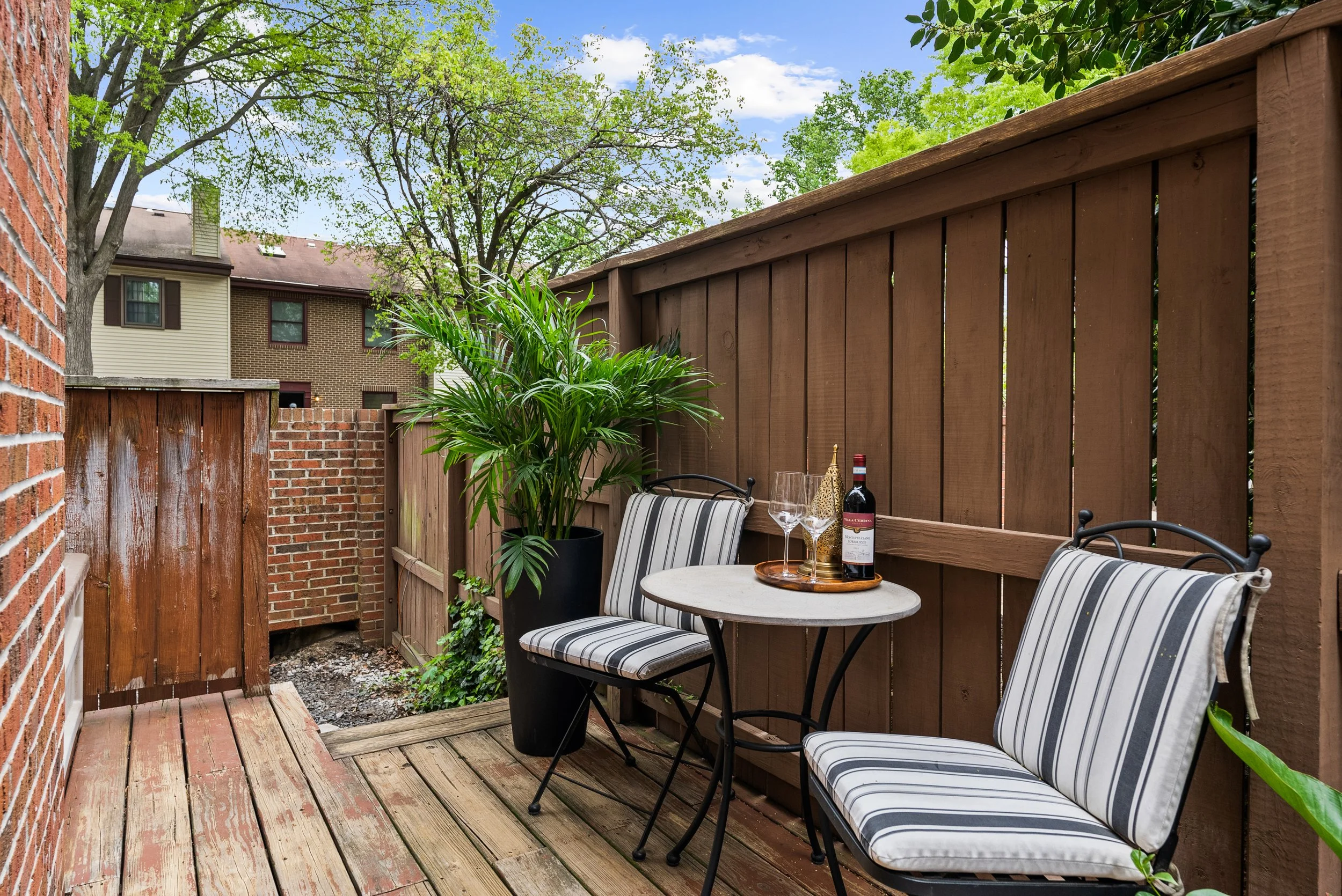
AFTER - cleared the algae, had a fight with neighbors and their trash cans, brought in some props to make it cozy
The part that doesn't show up on an invoice
Keeping things is harder than replacing them.
Anyone can gut a kitchen. What takes time is choosing quartz that sits well beside a floor from 1986, or a charcoal warm enough to live next to pink tile. Get it slightly wrong and the old thing reads as a leftover and the new thing reads as a patch — and the room ends up looking cheaper than if you'd touched nothing at all.
So much of this project was standing in rooms holding samples up against what was staying, changing my mind, and going back. None of that appears on a line item. It's also the whole difference between a house that looks updated and a house that looks like it was always this way.
The timeline: 24 days
The tenants moved out on March 31 and the house was active in MLS on April 24 — twenty-four days for demolition, whole-house paint, floors, carpet, counters, two baths, every light fixture, staging, and photography. This is the part I'm proudest of, and it's the part sellers underestimate most.
March 31: the tenants moved out.
April 1: crews started. Not "got scheduled." Started.
April 24: active in MLS.
How that was possible: the sellers agreed to use my contractors without collecting multiple competing estimates, and I was paying those contractors directly, so nothing waited on a transfer from the West Coast.
I want to be direct about that trade-off, because it's a real one. Multiple bids can save money. They also cost weeks — weeks of a vacant house, weeks of carrying costs, weeks of missing the spring market. My clients were 2,700 miles away and could not fly in to manage a bidding process.
So they trusted my bench. I've spent years assembling it: painters, floor crews, a carpenter-plumber, a granite fabricator, a carpet installer. Small outfits, all of them, and they show up for me on short notice because I bring them steady work and pay them the day they finish.
That trust is the reason the house hit the market in April instead of June.
What they were actually trusting
A friend of theirs, whose judgment they trusted, told them to call me. That got me the first conversation. It didn't get me the rest.
They had more information than most sellers get. The document I sent specified every color and finish — Kendall Charchoal in the entry hall, Tricorn Black on the railing, Edgecomb Gray in the baths — with a cost beside each line, room by room.
What they couldn't have was any way to judge it. A color name on a spreadsheet doesn't tell you whether dark paint in a windowless hallway will read as intentional or grim. Contractors they'd never met. A house they couldn't walk through. A list price built entirely on my read of the comps.
They had all the facts. They had no way to check the judgment. That is a lot to hand a person you've only spoken to on the phone.
The result
We received seven offers and the house sold for $1,125,000 — $125,000 over list and $280,200 above the tax assessment.
We listed at $1,000,000, above the $944,800 floor my renovated comps supported, because by the time we finished, the house was no longer competing with the un-renovated comps at all.
List price: $1,000,000. Sale price: $1,125,000. That is $125,000 over list, or 112.5% of asking.
Against the tax assessment of $844,800, the house sold $280,200 high — 133.2% of assessed value.
And against the best case I could honestly promise them for an as-is sale, roughly $894,800, the difference is about $230,200.
Set that $230,200 next to the $20,000–$30,000 range above and you can do the arithmetic yourself. I'd rather you do it than have me do it for you — because the next section is about why that ratio is not a promise.
How seven offers became $1,125,000
We listed on a Thursday with an offer deadline the following Monday afternoon.
That timing does two things. Everyone sees the house in the same window — a full weekend of showings, an open house, nobody getting a private head start. And a deadline turns a scatter of separate negotiations into a single event that happens on my calendar instead of theirs.
Seven offers arrived Monday. Monday night I went back to all seven and asked for best and final.
That second round is where the money is. In the first round nobody knows what they're up against. Buyers are guessing, and most guess low — they write what feels reasonable rather than what they'd actually pay. Once they knew the competition was real, several improved significantly. Some held exactly where they were. A few didn't move at all, and that's fine. You don't need everyone to move. You need the top two.
None of this works without real interest behind it. A deadline with two offers is a bluff, and agents can smell a bluff. The strategy was available to us because the house had earned it — the condition, the location, and the last week of April.
Now let me talk you out of half of that number
A return like this is not a promise — it is one outcome, in one house, in one spring, and a good share of it was luck. I'd rather you trust me than be impressed by me, so here is the part most case studies leave out.
Renovation was not the only variable in that $230,200, and I'd be lying if I told you it was. Several things went our way that I did not control:
The season. We hit the market on April 24. Spring has more buyers in it than any other stretch of the year — more people looking, more people competing, more people who have already lost two houses and are done losing. The same house, finished to the same standard and listed in November, would very likely have sold for less. Not because the work was worth less. Because there were fewer people in the room.
The competition, or lack of it. What else is active in your price band the week you list is almost entirely luck. We happened to be the finished townhouse in a moment when there wasn't another one.
Seven offers is not a repeatable event. Multiple offers produce escalation, and escalation is where the top end of that number came from. Sometimes it happens. Sometimes you get one good offer at list and that is a perfectly successful sale. I cannot manufacture a bidding war and neither can anyone else who tells you they can.
And not every dollar of improvement returns like this. Some renovations return well under what they cost. Pools. Highly specific taste. Over-improving past what the neighborhood supports. Layout changes that eat the budget and never show up in a photograph. Part of my job is knowing where the return curve flattens — and stopping there.
So what is reliable?
This: buyers want move-in ready. That is the durable finding, and it does not depend on the season.
Whether they escalate is up to the market. Whether they show up at all, how fast they decide, and how much room they leave for negotiation — that's driven by condition, and it holds in spring, in November, in a hot market and a slow one. A finished house sells faster and closer to its ask than an unfinished one every time. In a strong market that gap shows up as seven offers and $125,000 over list. In a soft market it shows up as sold in three weeks instead of sitting for four months while you drop the price twice.
The un-renovated comps I sent these sellers in February were real, and they sold roughly where I said they would. The gap between those houses and this one is the work. The size of the gap is the work plus the market.
Do the work anyway. It's the half you control.
What the sellers said
We had been renting out our Arlington townhouse for almost a decade after we moved to the west coast. The decor was definitely worn down and dated, so we were really looking for a realtor who was experienced with fixing up properties before putting them on the market, since we didn't have experience renovating houses or the ability to come back to Arlington for the sale.
Renata was very responsive when we reached out to her and mapped out the process needed to quickly get our house on the market with the necessary renovations. She provided very detailed estimates of her recommended renovations and was very accommodating when we didn't think all of them were necessary. She had everything ready to go the day after the tenants moved out, oversaw all aspects of the renovations and staging, and had the house on the market in less than a month. We were able to leave all details to Renata to take care of and she didn't disappoint! We received multiple offers and had an accepted offer significantly above asking price within a week.
If we ever find ourselves in the Arlington real estate market again, we will not hesitate to work with Renata!
If you're standing where they were
If you're holding a dated rental or an inherited house, the decision usually comes down to two things: as-is costs you in sale price instead of in cash, and condition decides which buyers walk through the door. A few more things I'd want you to know:
"As-is" is rarely the cheap option — it's usually the option where you pay in price instead of in cash. The gap won't always be $230,000; on this house, in this market, it was. But the shape of it is consistent. Money leaves either way. The question is whether it leaves as an invoice you can see or as a discount you never get a receipt for.
Condition selects your buyer. A dated house attracts people whose business model is your discount. A finished house attracts the family who's been outbid three times and is emotionally done losing. Those two buyers do not bid the same — and that's true in any season. Spring only changes how many of the second kind are in the room.
Speed is a strategy, not a personality trait. Twenty-four days from tenant move-out to active listing is not luck. It's having the crews lined up before the keys come back.
You do not have to be here. These sellers were on the West Coast the entire time. They never saw the house between the tenants leaving and the photos going live.
You may not have to fund it, either. On the right property, I pay the contractors and get reimbursed at closing. Ask me about it before you decide the work is out of reach.
Now the part that isn't strategy.
I love this work. Not the transaction — the making. Walking into a tired house and seeing what it could be, then standing in it three weeks later while it is that. And I love the weight of it: someone's money and someone's next chapter sitting in my hands while they're 2,700 miles away, unable to do anything but trust me. That isn't a burden I put up with. It's the reason I do this at all.
If you're holding a property you've stopped living in — a rental that's aged, an inherited house, a home you left for a life somewhere else — this is exactly the conversation I'd like to have with you. No obligation, no pressure. Just the same two-path comparison I ran for these owners, with your address in it — and if the work makes sense, I can front it the same way.